Five Poll-Bound States Record Net Drop of 2.29 Crore Voters After Electoral Roll Revision
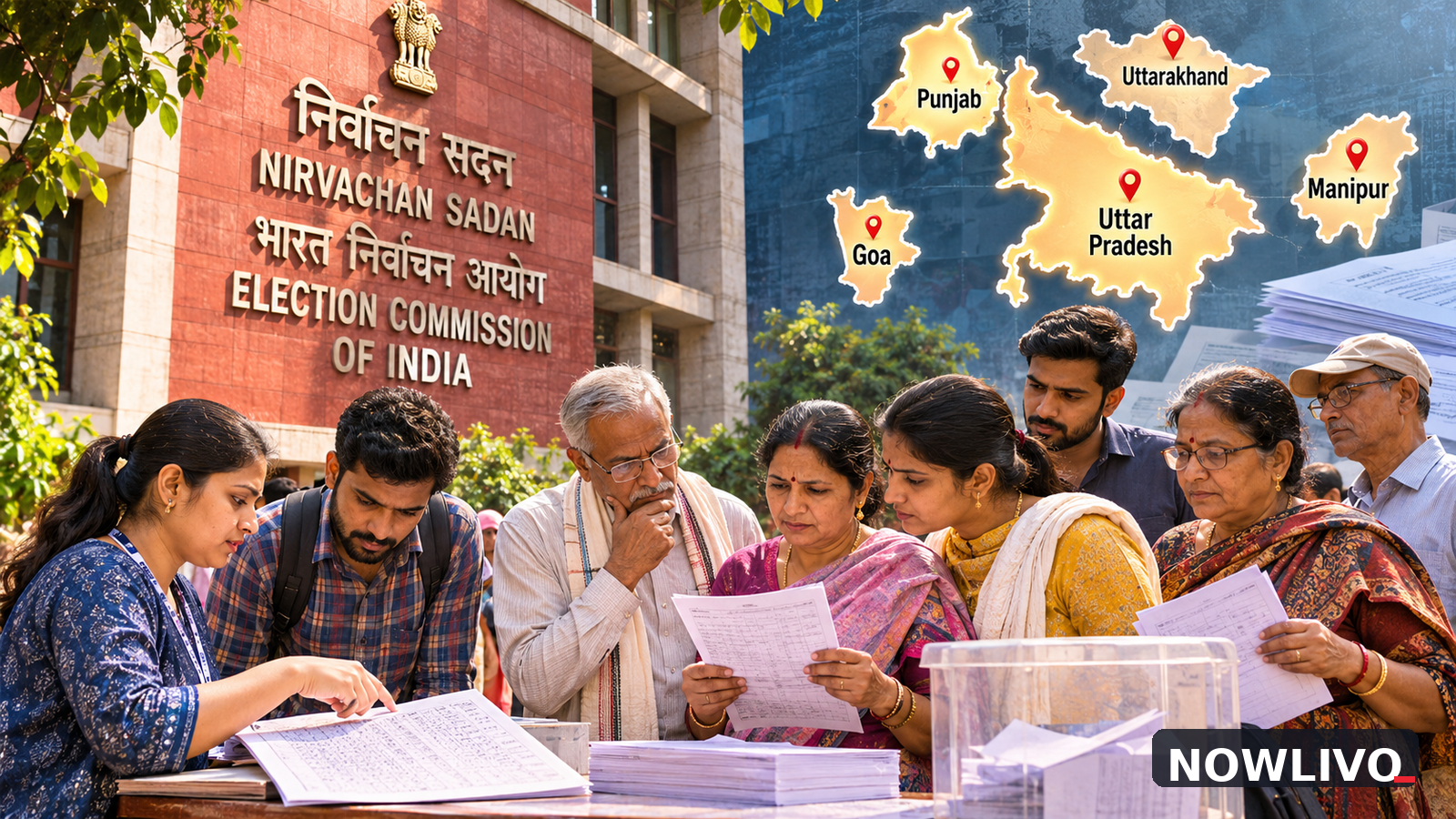
The combined number of registered voters in five states due to hold Assembly elections next year has fallen by about 2.29 crore following a Special Intensive Revision of electoral rolls, according to figures reported on Monday, November 2. Uttar Pradesh, Punjab, Uttarakhand, Goa and Manipur together had approximately 18.71 crore electors before the revision and about 16.43 crore in the final lists. The net reduction is roughly 12.2 per cent, with Uttar Pradesh accounting for most of the change.
The figures, reported by India Today citing Press Trust of India and data from election authorities, provide a more concrete picture of an issue that has already triggered political protests and disputes. A net reduction in registered voters is a measurable change in the lists; it is not, on its own, proof that every name removed was wrongly deleted. The accuracy of individual entries and the reasons for removals are separate questions that require examination of the revision process and any appeals.
Uttar Pradesh accounts for the largest decline
Uttar Pradesh's electorate fell from about 15.44 crore before the revision to 12.56 crore in the draft roll, before recovering to approximately 13.40 crore in the final list. That leaves a net reduction of about 2.04 crore, or 13.24 per cent. Nearly 84 lakh names were restored between the draft and final stages, a reminder that the draft roll was not the final word on eligibility.
The state's size means its numbers dominate the combined five-state picture. The reported net decline in Uttar Pradesh accounts for close to nine-tenths of the overall reduction. A comparison that simply says five states lost 2.29 crore voters can obscure how unevenly that change was distributed. The differences also matter politically because Uttar Pradesh has 403 Assembly constituencies and an exceptionally large electorate.
Punjab, Uttarakhand, Goa and Manipur
Punjab's voter count moved from about 2.15 crore before revision to 1.94 crore in the draft and 2.01 crore in the final roll. The net decline was around 14 lakh, or 6.34 per cent. Approximately seven lakh of the roughly 21 lakh names initially excluded from the draft were restored, the strongest proportional recovery among the five states in the reported figures.
Uttarakhand's count fell from around 80 lakh to 71 lakh in the draft before ending at 72 lakh, a net reduction of about eight lakh or 10.07 per cent. Manipur's electorate moved from roughly 20.9 lakh before revision to 19.3 lakh in the draft and 19.6 lakh in the final roll, a net fall of around 1.3 lakh or 6.33 per cent.
Goa recorded a different pattern. Its electorate went from approximately 11.85 lakh before the revision to 10.85 lakh in the draft and then 10.58 lakh in the final list. The net reduction was close to 1.3 lakh, or 10.76 per cent. It was the only one of the five where the final roll was smaller than the draft, rather than showing a net restoration.
Why draft and final figures must not be confused
The three figures for each state represent different stages: the pre-revision list, the draft after initial scrutiny and the final roll after further processes. A person missing from a draft may later be restored, as happened for many names in Uttar Pradesh and Punjab. Conversely, a final roll may still be challenged or corrected through legally available registration and appeal procedures.
That distinction is central to the political debate. Opposition parties have raised concerns about deletions and exclusion, while election authorities point to the revision and correction process. The newly reported totals describe the outcome of the exercise in aggregate; they do not establish the intent behind each deletion or resolve whether particular voters were correctly handled.
What happens before the elections
The five states are expected to hold Assembly elections in 2027, and election authorities have indicated that further summary revision will provide opportunities for eligible people left off the lists to enrol. People reaching voting age by the applicable qualifying date may also be able to register. Anyone concerned about an individual entry should consult the official Election Commission voter-service portal or the relevant state chief electoral officer rather than rely on a social-media screenshot.
The portal offers voter-search, registration and application-tracking services. Whether a person can vote depends on being included in the appropriate electoral roll, not merely possessing a physical voter identity card. That is why an aggregate revision story has an immediate practical dimension for families in the five affected states.
Monday's newly assembled state-level comparison is likely to sharpen political scrutiny because the net decline is large and the elections are approaching. The next important evidence will be the handling of fresh enrolments, corrections and challenges—not just repeated claims about the headline total.