Gemini 4 Argon: What Google Launched and Who Can Use It
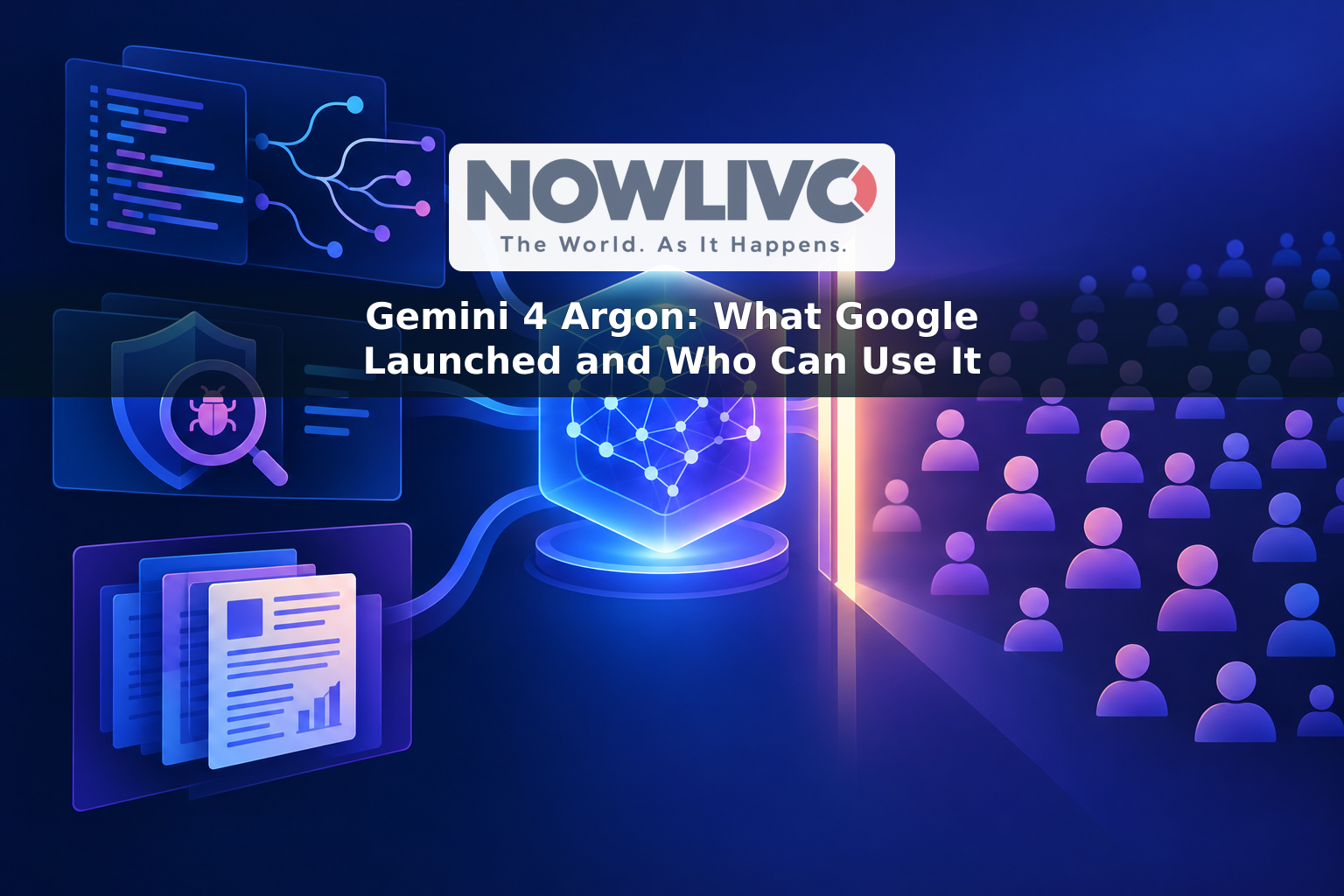
Google announced Gemini 4 Argon on September 30, 2026, but it is not yet a general release for Gemini users. The model is beginning to reach selected cybersecurity defenders through Google’s Fairwind Program. Google plans to expand access to developers, businesses and consumers after further testing, starting with paid API customers and Google AI Ultra subscribers, but has not given a date for that expansion.
Argon is designed for work that takes many steps rather than a single short exchange. Google is positioning it for software engineering, research and writing, professional tasks involving areas such as finance and law, and defensive cybersecurity. Those capabilities explain both the interest in the launch and the distinction readers should keep in mind: announcing the model is not the same as making it available in the Gemini app.
What is different about Gemini 4 Argon?
One notable specification is its output limit of up to one million tokens, increased from a previous limit of 64,000. That figure describes how much the model can produce during a task, not how much material a user can upload or place in a prompt. Google says the larger allowance gives Argon room to work through longer sequences of reasoning and generate more extensive results.
Google says its engineers are already using Argon for debugging and larger programming projects. Among the examples it gave are efforts to move C and C++ code into Rust, including work involving the Zircon kernel used by Fuchsia. The company says those substantial code changes still undergo automated and manual review before production use. It also reported using Argon agents to identify memory-saving changes across its data centers; some of those savings depend on the changes being rolled out.
For prospective users, these examples show the sort of sustained work Google wants the model to handle. They should not be read as a promise that every generated patch, analysis or draft will be correct without review.
Why does cybersecurity get access first?
Google says Argon was trained to find, check and repair software vulnerabilities. It is giving selected defenders access through Fairwind so they can test those capabilities on real defensive tasks and provide feedback before wider deployment. Google says security company Wiz has already used Argon in its Scan for Good initiative and that the model identified a serious exposure in healthcare software that earlier models had missed.
That is a company-reported example, not evidence that Argon can reliably discover every vulnerability. Google reports that the model tied for the top score on CWE-bench v1, a test of vulnerability remediation, at 68%. Its claims about performance in other fields also rest on particular evaluations and test settings. Results on benchmarks offer a way to compare defined tasks, but they do not establish how the model will perform in every workplace or security environment.
The limited rollout also reflects the risks of releasing a powerful cyber-capable model. Google says it is testing safeguards against misuse and prompt-injection attacks, monitoring the model’s actions during tasks, and strengthening the environments in which it is evaluated. It says the initial group of trusted defenders and its own teams can use Argon without certain cyber restrictions so they can exercise its full defensive capabilities. Broader access will follow a different, phased process.
What will access cost?
Google has announced an introductory API price of $2 per million input tokens and $10 per million output tokens, with cached input tokens discounted by 95% from the input price. After the introductory period, the stated rates rise to $4 and $20 per million input and output tokens, respectively. Google has not specified when the introductory period ends.
Those are announced usage rates, not a sign that anyone can call the model through the API now. Google says paid API customers and Google AI Ultra subscribers are first in line when it moves beyond its initial testers. Until it provides a release date and access details, the practical answer for most readers is simple: Gemini 4 Argon has been introduced, but they cannot yet try it themselves.