NCERT’s Class 9 Personal Finance Chapter: What It Covers and When Students May Study It
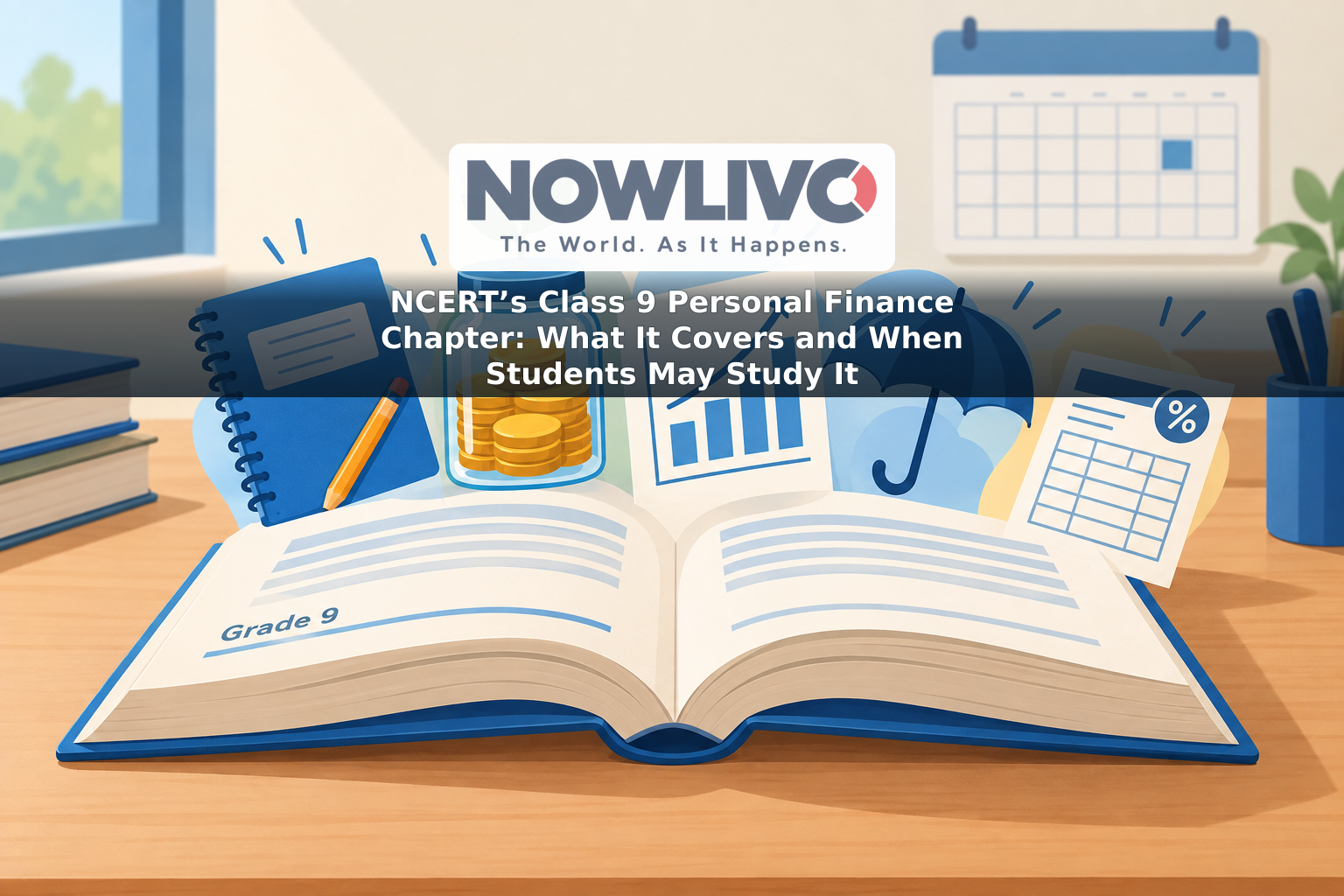
A reported NCERT chapter on personal finance is aimed at Class 9 students. NCERT’s draft social science syllabus lists lessons on budgeting, interest, savings, investments, risk, insurance and personal income tax. Its plan is to introduce new Class 9 textbooks in the 2026–27 academic session. That identifies the intended students and school year, but it does not establish the final wording of the chapter or the week it will be taught in any particular classroom.
What does the NCERT material include?
The clearest official outline is in NCERT’s draft syllabus for the second part of Grade 9 social science. It allocates six hours to a unit called “Smart Ways to Manage Your Finances.” The outline begins with everyday decisions about income, spending and saving. It then covers inflation and purchasing power, the difference between simple and compound interest, and how to prepare a personal or family budget.
Students are also expected to identify savings and investment options, including fixed deposits, stocks, bonds and mutual funds. The draft pairs those topics with risk, returns and insurance. On tax, it calls for students to understand the concept of personal income tax and why citizens pay it. These are proposed learning goals, not instructions for children to file tax returns or buy financial products.
Accounts of the newly reported chapter describe worked income-tax examples and a focus on the newer tax regime. That level of detail should be distinguished from the draft syllabus: the official outline confirms that income tax belongs in the proposed unit, but does not by itself verify particular tax tables, examples or every sentence of a finished textbook. Tax figures can change, so a classroom example should not be treated as current tax advice for a household.
Which students are expected to study it?
The unit appears in NCERT’s Grade 9 social science plans. It is not presented there as a separate compulsory personal-finance subject for every schoolchild in India, nor as a chapter newly assigned to Class 10. Schools and education boards determine which textbooks and teaching schedules they follow. For a family trying to establish what a particular student must study or prepare for an assessment, the school’s prescribed book and current course plan matter more than a news listing of a chapter.
NCERT’s broader textbook transition helps clarify the distinction between grades. In a March 17, 2026 advisory, it said new Grade 9 textbooks were intended for use from the 2026–27 academic session. It placed the introduction of new textbooks for Grades 10 and 11 in 2027–28, with existing books continuing for those two grades during 2026–27. The later timetable for Grades 10 and 11 should not be mistaken for the intended start of the Grade 9 material.
When might it reach classrooms?
The intended window is the 2026–27 Class 9 session, not a single nationwide lesson date. Even after a textbook is released, a teacher may reach a personal-finance unit at a different point in the school year depending on book availability and the school’s teaching plan. NCERT’s May 2026 update said its Grade 9 social science textbook was still being developed at that point, illustrating why an earlier syllabus or archive entry could not confirm that pupils already had the finished chapter.
The practical distinction is between planned coverage, published textbook content and classroom instruction. The draft supports the first; reports of a released chapter need checking against the finished NCERT edition for the second; and a school’s schedule establishes the third. Parents and students should therefore use the latest book prescribed by their school rather than assume that an archive listing settles all three questions.