Gemini Adds Adobe, Airtable, Peloton and SeatGeek Connected Apps: What They Can Do
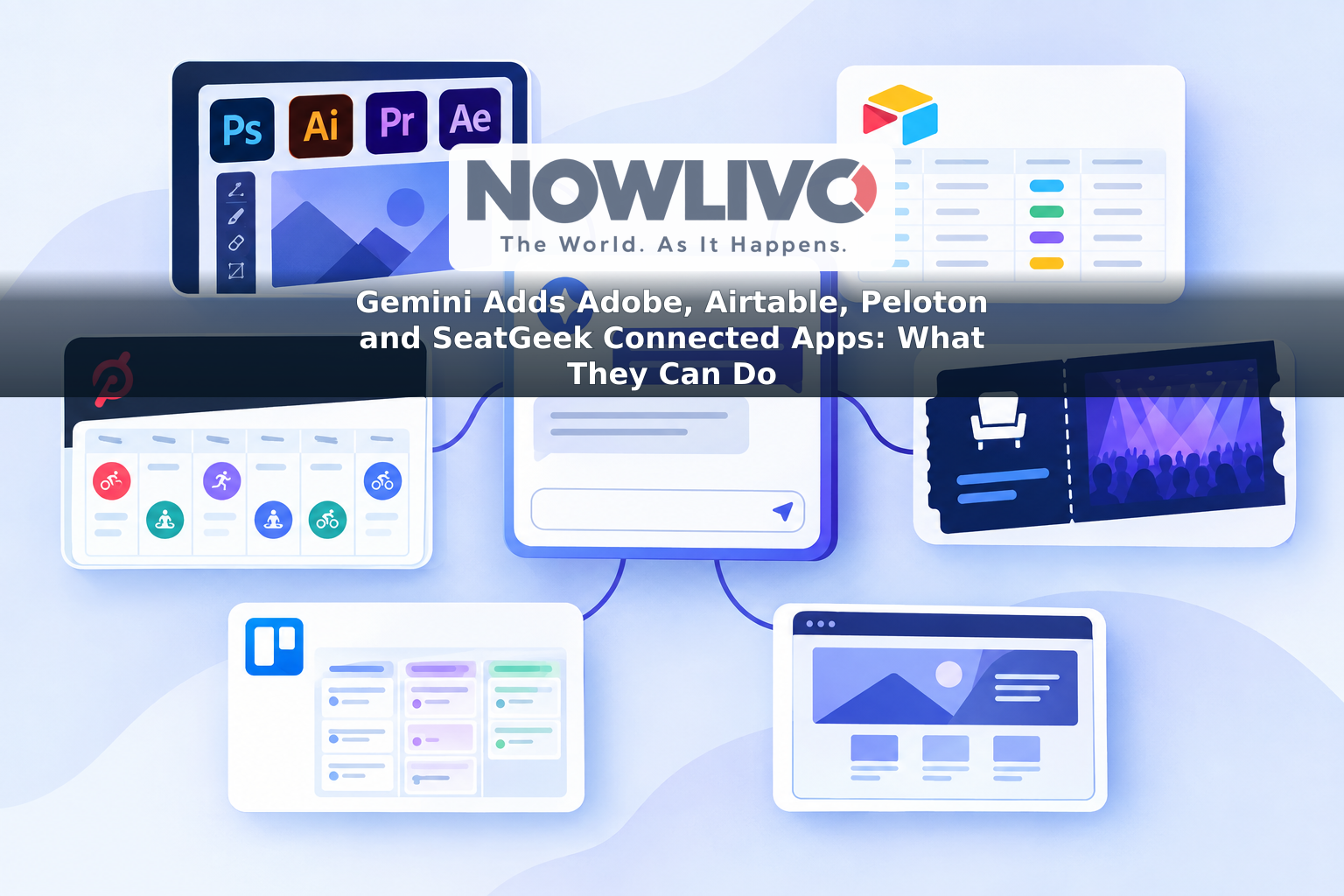
Google is adding Adobe, Airtable, Peloton and SeatGeek to Gemini’s Connected Apps, alongside tools for project management, website creation and everyday planning. The integrations let eligible users ask Gemini to work with a supported service from a conversation, though each app has its own limits. The rollout began on September 23, 2026; users can check Gemini’s Connected Apps settings to see which services are available to them.
Which apps are in the expansion?
The new productivity connections cover Airtable, Linear, monday.com, PandaDoc, Wispr AI and Zoho. They are intended for tasks such as finding information in a database, tracking project work, handling documents and reviewing notes. Google’s creative group includes Adobe, Picsart, Squarespace and Webflow. Apartments.com, Experian, Peloton and SeatGeek make up the lifestyle group.
These are distinct connections, not a single feature that works identically across all 14 names. Airtable’s connection, for example, can search workspaces and manage tables and records. Linear supports creating and tracking issues and project cycles, while PandaDoc supports document and recipient-management tasks. The available Zoho connections cover specific products, including CRM, Mail, Desk and Projects, rather than every Zoho service.
What can Gemini do with Adobe, Peloton and SeatGeek?
The Adobe connection is designed to work with products across Adobe’s creative suite. Picsart supports media-creation and editing tasks, while Squarespace and Webflow focus on building or changing websites and their content. A request to design an asset or update a page therefore depends on which service is connected and which actions that service supports; adding Adobe does not mean every creative action is available in every Adobe product.
Peloton’s connection can find and schedule classes and create multi-day training plans. SeatGeek can search upcoming events using details such as a team, artist, venue, location or date. Gemini can show ticket listings with price and seating information, then direct a user to SeatGeek’s checkout. The integration is a way to discover and compare tickets in a Gemini conversation, not a claim that ticket purchases are completed entirely inside Gemini.
Experian supports checking a FICO credit score and reviewing factors in a credit report, including payment history and credit utilization. Apartments.com is included for property searches. As with the other connections, users should inspect the actions shown for an app before assuming Gemini can perform a particular task.
How do users connect an app?
In Gemini, users can open settings and look for Connected Apps, then select an available service and follow its connection prompts. They can also name an app in a chat or type an @ mention; if they are eligible and it has not yet been connected, Gemini can offer the option to link it. A signed-in account is required, and users can disconnect apps later in settings.
Availability is not uniform. Google lists many of the new integrations, including Airtable and Peloton, for English-language users aged 18 or older with a personal Google Account in the United States. Adobe’s listed coverage extends to countries where both Gemini Apps and the third-party service are supported. Monday.com also has broader listed account eligibility than several other additions, while the listed Zoho product connections are limited to India.
Device support differs as well. SeatGeek is listed for the Gemini web app, whereas Peloton and Airtable are listed for both the web and mobile apps. Picsart is listed for the web app only. An app missing from one device may therefore be available on another, but its absence may also reflect account, language, location or rollout restrictions.
Connecting a service gives Gemini a route to information or actions in that service, so it is worth reviewing the permissions presented during setup, especially for work documents, credit information or personal records. Users should also check the result of a requested change—such as an updated database record or scheduled class—in the relevant app.