Google Lyria 3.5 Lets Gemini Turn Text or Images Into Full Music Tracks
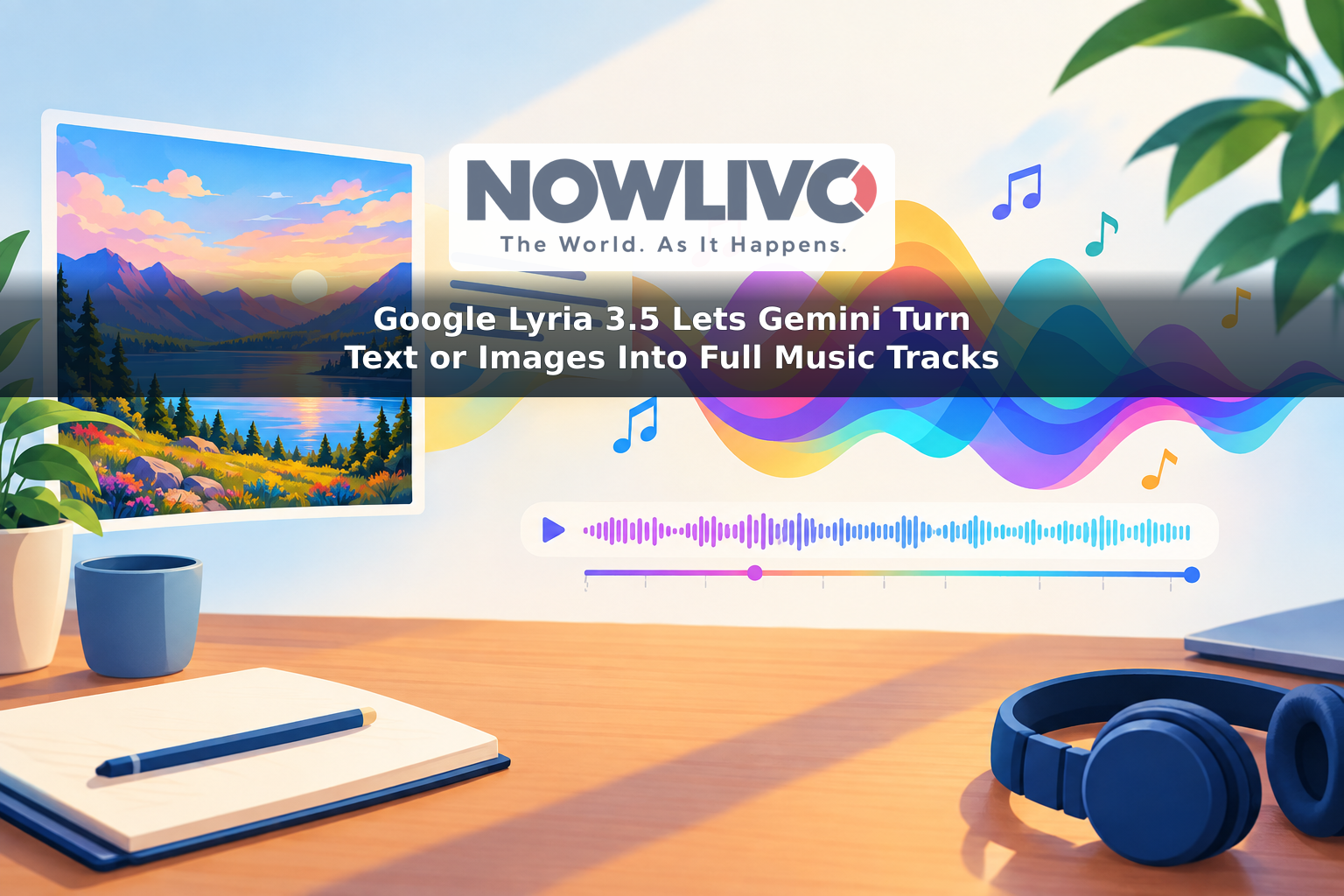
Google’s Lyria 3.5 lets people make music in Gemini from a text prompt or an uploaded image, including full tracks of about two to three minutes. The practical change for creators is that an idea for a video soundtrack, birthday song or personal jingle can become a longer piece rather than just a brief clip. To make a full track in Gemini, users need to select the Pro model; availability and generation limits depend on their account.
Google brought Lyria 3.5 to the Gemini app on September 4, 2026. The update adds choices for genre, vocals or instrumentals, and track length, along with templates for starting a song without writing a detailed prompt. Google says the model improves vocal expression and musical arrangements over its earlier music tools.
How to make a track in Gemini
In the Gemini web or mobile app, eligible users can open Upload and tools, choose Create music, and describe what they want to hear. They can also add an image for context. A creator might upload a photo from a road trip and ask for an upbeat instrumental that suits its colors and mood, or type a request for a gentle acoustic song about a friend’s birthday.
The music controls let users choose a genre, specify whether the track should have vocals, and select a length. Gemini describes its short option as roughly one minute and its full option as roughly two to three minutes. Anyone trying to make the longer version should switch the Gemini model to Pro before generating. A prompt can be simple, but details such as tempo, instruments, subject and vocal style give the system clearer direction.
Image input is useful when the visual comes first: a creator assembling a slideshow or short video can ask for music inspired by a picture instead of trying to translate its atmosphere into a list of musical terms. The image guides the generated track; it is not converted into a recording of sounds from the scene. Users can request a vocal song or keep the result instrumental when they need background music under spoken audio.
What changes from earlier Gemini music clips?
Gemini’s earlier Lyria 3 launch in February 2026 centered on 30-second tracks made from prompts, photos or videos. Lyria 3.5 gives users a route to a more song-length result. Google describes the model as capable of maintaining a structure with verses, choruses and bridges, rather than merely extending a short loop. Tracks can run up to three minutes, though users should listen to the finished result before assuming its lyrics, timing or transitions fit a project.
Finished tracks can be downloaded as an MP3 audio file or as an MP4 with generated cover art. Gemini also offers a sharing option. That makes it straightforward to send a personalized song to someone or bring an audio file into a video edit, although creators should check the requirements of any platform or project where they plan to publish it.
Music generation in Gemini requires users to be at least 18, signed in with an eligible account and to have Keep Activity enabled. Google says Lyria 3.5 is available to users globally on the web and in the mobile app, but the number of tracks a person can generate is limited. Someone who does not see the full-length choice should first check the selected Gemini model and their account’s available features rather than assume that every music request will produce a three-minute song.
What should creators know before sharing?
Google embeds SynthID, its imperceptible AI watermark, in music generated through Gemini. The company also says the feature is intended for original expression rather than copying a named artist: when a user requests a specific musician, Gemini treats that name as broad stylistic inspiration. Google acknowledges that its safeguards may not catch every problematic result and provides a way to report content that may infringe someone’s rights.
For a creator, the distinction is between a track that sounds useful and one that is ready to publish. Listening for awkward lyrics, unexpected vocal choices and a closing section that fits the video remains a necessary final step—especially when the music was generated from an image and much of the creative direction was left to Gemini.