Rafale Marine Lands on INS Vikrant for First Time as Navy Tests Carrier Operations
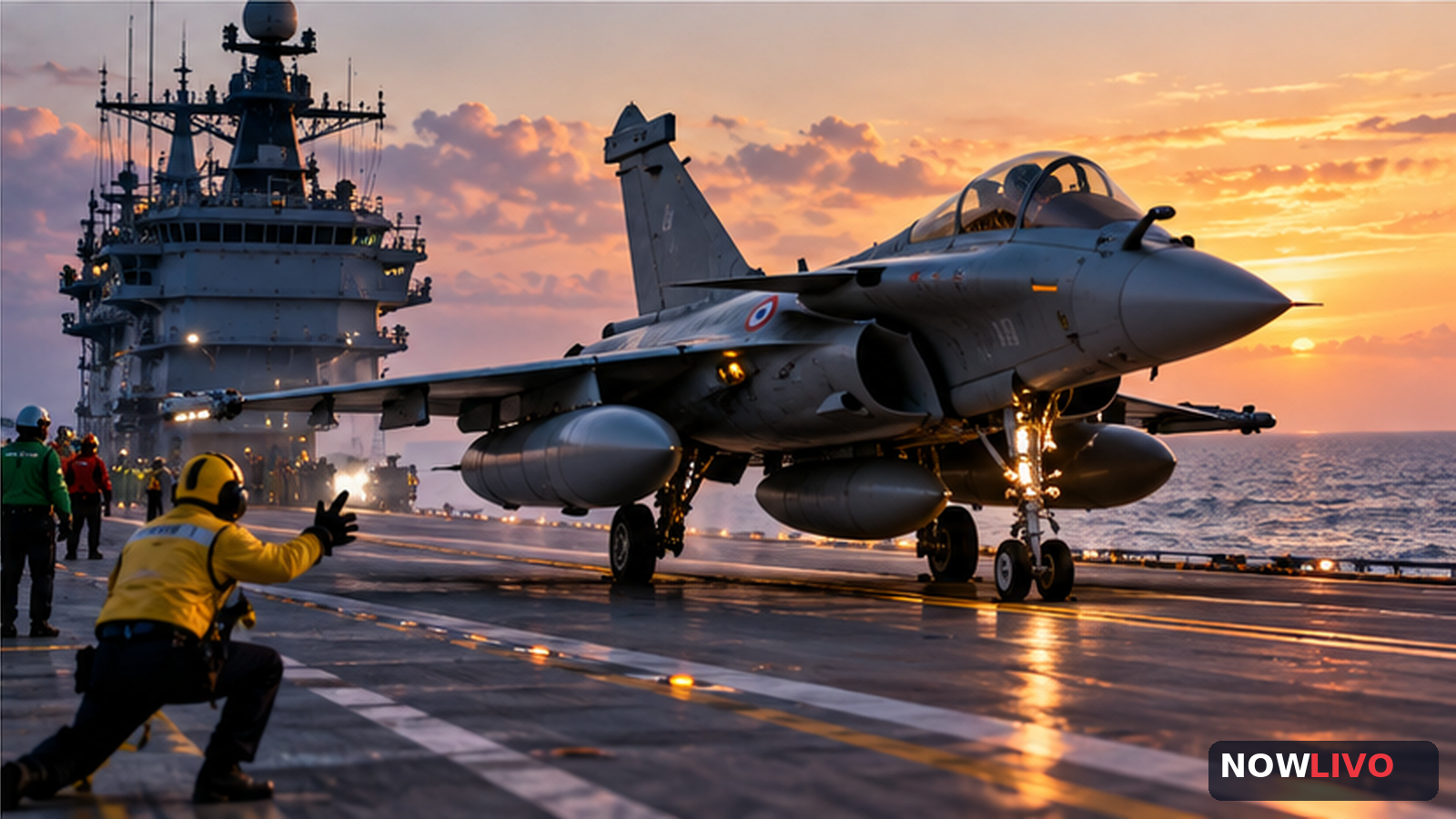
The Indian Navy has confirmed that a Rafale Marine fighter jet successfully landed on the indigenous aircraft carrier INS Vikrant on its first attempt, marking an important step in trials for the aircraft's future service at sea. The landing took place on October 29, and the Navy shared a video of the event on Friday, October 30. The timing makes this a new operational milestone rather than another announcement about a proposed defence purchase. A carrier landing tests a very different set of requirements from an aircraft's routine flight from a land-based runway.
The Navy said the ongoing trials represent initial steps towards operationalising the French-origin Rafale Marine in Indian service. India has contracted for 26 naval variants, with deliveries expected later in the decade. The present test does not mean that the entire ordered fleet has arrived or that the aircraft is already deployed on routine combat missions from Vikrant. The distinction is important because procurement, trials, training and operational readiness are separate stages, each requiring its own work and official clearance.
What the first landing establishes
Landing a fast jet on a moving carrier requires precise alignment, suitable deck procedures and equipment capable of absorbing the forces involved. A successful first attempt is therefore meaningful to the teams testing how the aircraft and ship work together. It demonstrates that a particular landing was completed, but it does not by itself certify every launch, recovery and maintenance procedure that will be required for sustained operations. The Navy's announcement described the trials as ongoing, and further validation is expected before full integration.
INS Vikrant is a major part of India's effort to maintain a capable naval aviation force from an aircraft carrier built in the country. The Rafale Marine is designed for carrier operations and differs in important respects from a land-based fighter. The aircraft uses naval equipment and procedures suited to the demanding environment of a ship at sea. That makes integration more complex than simply placing a new jet on the flight deck. The Navy must examine how aircraft handling, storage, maintenance and launch-and-recovery operations fit the ship's systems.
The significance of the 26-aircraft order
India's contract covers 26 Rafale Marine aircraft. Reporting on the programme has indicated that deliveries are expected by the end of 2028 or in early 2029, although future schedules can change. A trial in 2026 should not be confused with a delivery date or a formal induction ceremony. The aircraft's eventual role will depend on training, logistics, weapons integration and the ability to maintain availability during extended deployments. A carrier-based fighter is valuable only when the broader aviation system can support it.
The aircraft is intended to strengthen the Navy's ability to operate combat jets from the sea, providing options for air defence and maritime missions. Those roles help explain why the first landing is attracting attention, but they should not be turned into claims about a new operational capability that has already been fully fielded. The Indian Navy has not said that this single trial establishes a particular combat range, weapons load or mission readiness from Vikrant. Such details belong to later phases of the programme.
Why the Navy released the video
The public footage gives viewers a concrete event to evaluate: a fighter approaching and landing on the carrier during trials. It is a stronger news trigger than broad claims that the programme is progressing. The Navy's own statement also fixes the date of the landing, avoiding confusion between the October 29 operation and the October 30 release of information. That is relevant when a video begins circulating across social platforms without a clear timestamp or when older aircraft footage is shared as if it shows the new trial.
The next questions are practical. How many additional landings and take-offs will be conducted? What ship modifications or operating procedures will be validated? When will the aircraft be available for training in India in greater numbers? Officials have not provided all those answers in the material available for this report. Readers should avoid treating online estimates as formal Navy schedules, particularly when they concern procurement timelines that can change with testing and production.
For now, the verified achievement is specific and significant: a Rafale Marine aircraft landed successfully aboard INS Vikrant on October 29, and the Navy confirmed the event publicly on October 30. It is a step towards integrating the type with India's carrier aviation, not the final step. That distinction gives the milestone its proper weight without overstating what one successful landing can establish about the programme as a whole. Later trial announcements should distinguish landings, take-offs and sustained shipboard operations; success in one phase does not automatically demonstrate that every procedure needed for routine deployment has been completed.