What Does Recycled Polyester Mean? How to Read Clothing Claims
Recycled polyester means polyester made using recovered material rather than only new feedstock. It does not mean a garment is plastic-free, biodegradable or automatically easy to recycle again. The label describes part of its material story, not its whole environmental footprint.
For shoppers, a better question is what the claim covers and whether the clothes will last. A specific material percentage gives you more useful information than a broad promise that a collection is “green.”
Where does recycled polyester come from?
Textile Exchange identifies mechanical recycling of PET plastic bottles as the most common alternative to virgin polyester. Textile-to-textile recycling is another route the industry is working to expand.
Those routes are different. A shirt made using recovered bottles has recycled content, but it does not prove that old shirts became new shirts. Ask a brand to identify the feedstock if that distinction matters to you.
Read the percentage, not just the headline
Look for a statement tied to the product you are buying. Does the recycled percentage refer to the complete garment, its main fabric or one component? What other fibres are included?
Consider a hypothetical jacket whose main fabric contains recycled polyester but whose lining uses a different material. A product description about the outer fabric should not be read as a claim about every part. Zips, coatings, trims and lining also belong to the product.
Does recycled polyester shed microplastics?
Polyester remains a synthetic plastic fibre when recycled. The European Environment Agency identifies the wearing and washing of synthetic textiles as a source of microplastics. Changing the source of the material does not, by itself, remove that issue.
Shedding also depends on fabric construction, production and care. A recycled-content percentage is therefore not a measurement of how many fibres a garment releases. Natural textiles can shed microfibres too; “microfibre” and “microplastic” are not interchangeable labels for every fibre.
Four questions worth asking a clothing brand
- What is recycled? Ask for the percentage and the component it covers.
- Where did it come from? Look for an explanation of the recovered feedstock.
- What is verified? If certification is mentioned, check the scheme and the scope of the claim.
- What happens after use? Ask whether a take-back programme offers reuse, actual recycling or simply collection.
These questions turn a vague sustainability pitch into information you can compare. A brand saying less but providing clear evidence may be easier to assess than one covering the page with environmental slogans.
Care and durability still matter
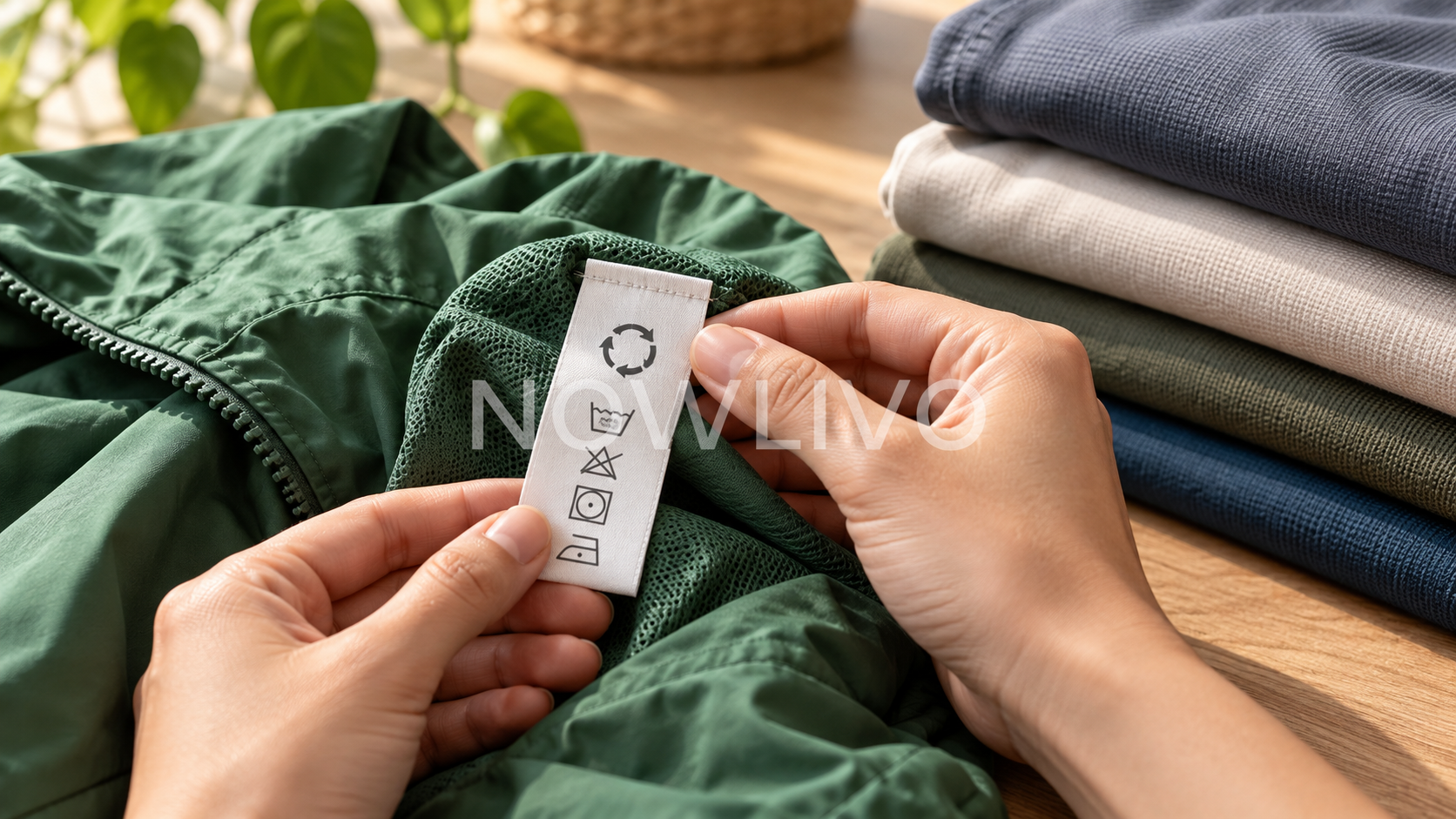
Follow the garment’s care instructions and choose a wash appropriate to its condition. The EEA notes that longer cycles and high temperatures can increase fabric wear and fibre release. Washing less often when the garment does not need cleaning can also reduce unnecessary wear.
Inspect seams, fit and likely use before buying. A jacket you can comfortably wear for years has a different role in your wardrobe from an item bought for one photograph. Recycled content is one consideration alongside quality and whether you need another garment.
What the label helps you decide
Use recycled-polyester claims to understand sourcing. Use fit, construction and care requirements to judge whether a garment suits your life. Ask for evidence when the product page stretches a narrow material claim into a sweeping environmental promise.
Explore NOWLIVO’s Fashion section for more coverage of materials and the industry. A good purchase starts with a claim you can understand and clothes you expect to keep using.