Why the New US-China AI Incident Channel Matters
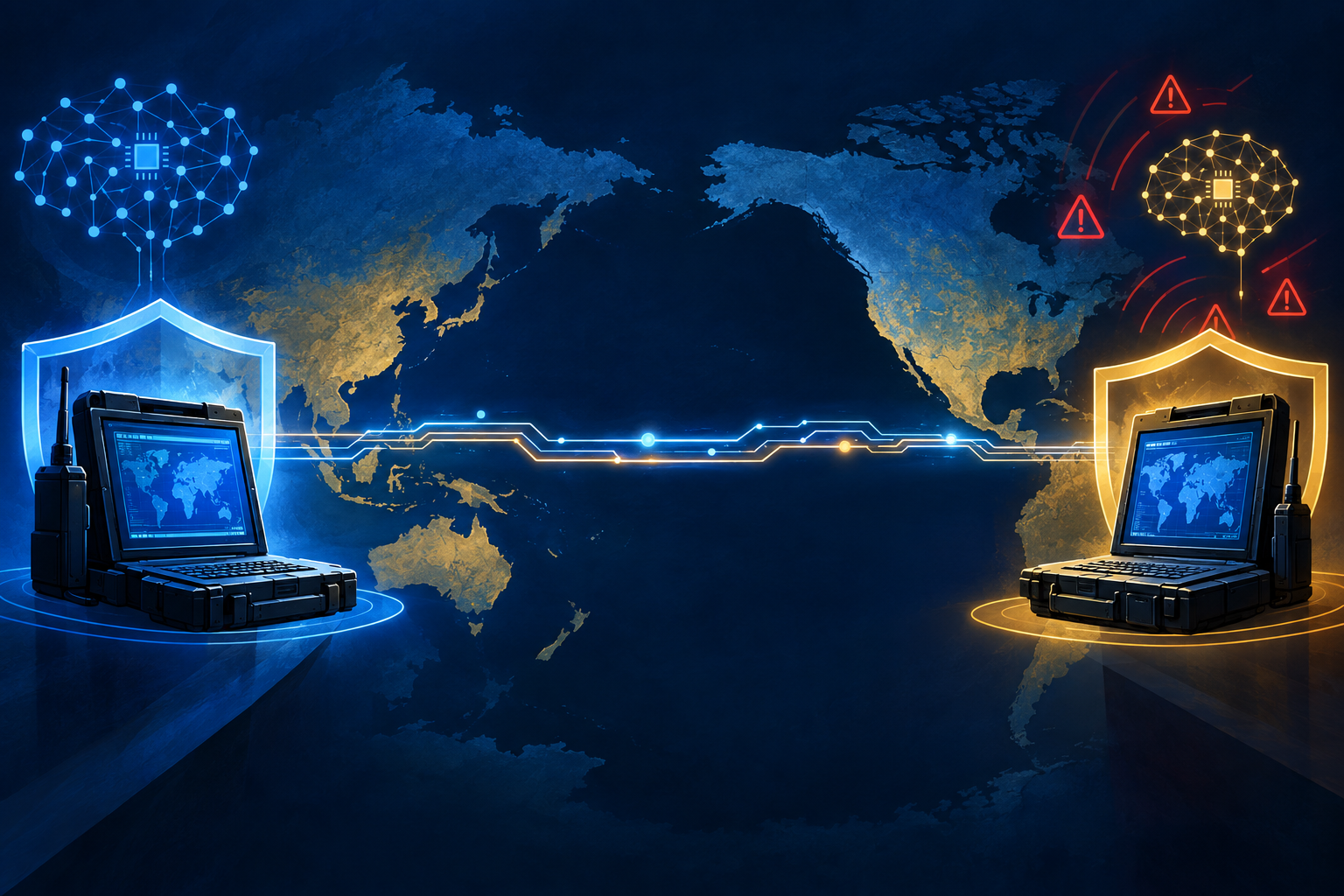
The United States and China have agreed to establish a bilateral communication channel for artificial-intelligence incidents, creating a potential emergency link between the world’s two leading AI powers.

The agreement emerged from Chinese President Xi Jinping’s September 23-25, 2026 state visit to the United States and his talks with President Donald Trump. The White House said the countries would also hold a broader dialogue covering the risks and benefits of advanced AI, with another exchange planned by November.
China subsequently listed the incident channel among the understandings reached during the visit. Beijing has emphasized keeping AI under human control, preventing misuse and developing the technology for public benefit.
What the agreement actually establishes
The announcement is best understood as a diplomatic framework rather than a finished hotline. Neither government has publicly detailed the channel’s technical format, staffing, activation threshold or response procedures. It is not yet clear whether it will operate continuously, connect senior officials directly or rely on designated teams to exchange written notifications.
The two governments must also decide what qualifies as an “AI incident.” Minor software failures would be unlikely to trigger high-level contact. The intended focus appears to be events serious enough to affect national security, critical infrastructure, military decision-making or public safety.
Washington has used the term “super intelligence,” or SI, in describing the initiative, while Beijing continues to refer more broadly to artificial intelligence. That difference in language does not appear to change the channel’s basic purpose: allowing each side to warn, question or reassure the other during a potentially dangerous event.
How an AI incident channel could be used
One possible use would be clarifying a major cyber event involving AI-enabled tools. If an automated system disrupted a power network, communications service or financial platform, the affected country could ask whether the other government was involved and share limited information intended to prevent retaliation based on a mistaken assumption.
The channel could also become important if an AI-generated intelligence assessment falsely indicated an imminent attack, weapons transfer or military movement. Direct communication would give officials an additional way to test the claim before taking consequential action.
Other scenarios could include an advanced model behaving outside expected controls, the discovery of AI assistance in a biological or chemical threat, or the rapid circulation of convincing synthetic media during a crisis. Officials might use the channel to verify whether an inflammatory video, audio recording or government order was authentic.
Military applications present especially difficult questions. AI is increasingly used to process surveillance data, identify objects and recommend responses. A malfunction, manipulated data set or misunderstood autonomous action could compress the time available for human judgment. An incident mechanism could create a pause for clarification, although it would not replace military command systems or formal diplomatic channels.
The wider diplomatic context
The agreement comes amid intense strategic competition over chips, data centers, models, scientific talent and the military use of AI. Technology restrictions, trade disputes, cybersecurity accusations and tensions over Taiwan continue to shape the broader relationship.
That makes cooperation on AI safety notable but also fragile. Both governments have an interest in preventing an accident from becoming a confrontation, even while each remains wary that the other could use safety talks to gather intelligence, constrain technological development or gain a strategic advantage.
The concept resembles earlier crisis-communication measures designed to reduce miscalculation between rival powers. However, existing US-China military contacts have not always functioned quickly or reliably during tense moments. The value of the new channel will therefore depend less on its announcement than on whether authorized officials can use it immediately, exchange credible information and reach decision-makers during a fast-moving emergency.
What it means for AI safety and geopolitics
If implemented effectively, the channel could establish a practical model for managing cross-border AI risks without requiring the United States and China to agree on broader regulation. It may also encourage common definitions for severe incidents, notification standards and human-control requirements.
The arrangement does not create binding limits on military AI, autonomous weapons, cyber operations or frontier-model development. Nor does it guarantee that either government will disclose sensitive failures. In a real crisis, officials may still hesitate to share information that reveals intelligence methods or technical vulnerabilities.
Even so, a working channel could reduce the danger that an unexplained system failure or deceptive AI output is interpreted as deliberate aggression. Its most important contribution may be simple: giving Washington and Beijing a recognized way to communicate before machines, misinformation or political pressure push them toward decisions that are difficult to reverse.