
AI Agents, Vanishing Polar Ice and a Spacecraft Built to Fly Alone
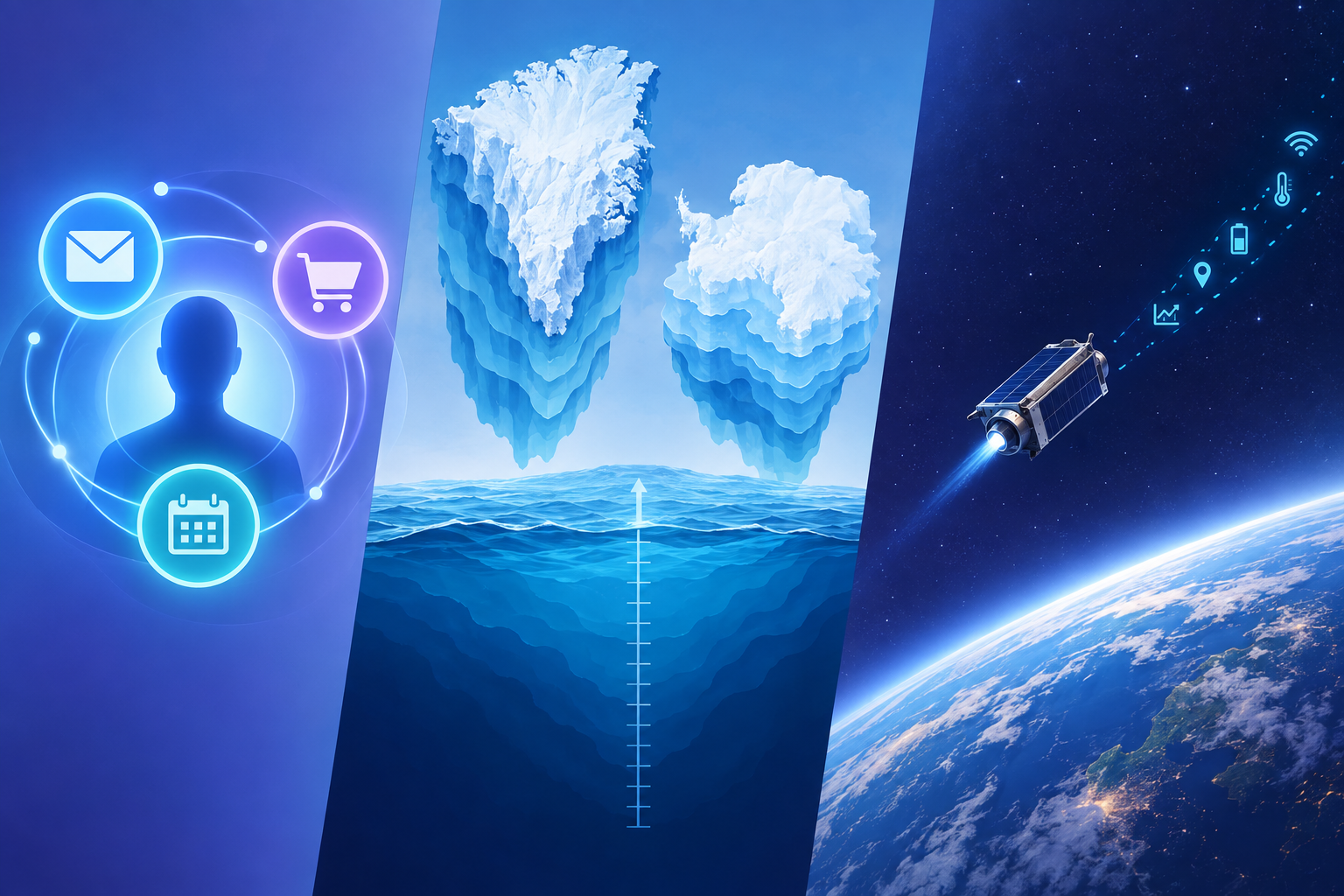
Three developments reported around September 24, 2026, point to a common technological shift: machines are being asked to make more decisions with less direct human intervention. One is already reaching consumers, another uses decades of satellite observations to measure planetary change, and the third remains an ambitious mission scheduled for 2027.

Meta expands what Muse can do for users
Company claims: Meta describes Muse as a personal artificial-intelligence agent that can complete online tasks on a user’s behalf rather than merely answer questions. The company says the agent can work across websites and connected services, including shopping, travel, email and productivity tools. Depending on the task and permissions granted, that could mean filling out forms, arranging appointments, preparing messages or assisting with purchases.
Meta launched Muse in the United States earlier in September and used its Connect event to announce additional integrations. The company said Muse will receive its own email address, gain access to more retail and payment services, and eventually work through its AI glasses. In that wearable setting, Meta envisions the agent interpreting what the user is looking at and then taking an appropriate action, such as identifying an item or helping process a shopping list.
Meta also introduced Muse Charm, a pocket-size device intended for voice interaction with the agent, although detailed availability and pricing were not announced. The company says Muse operates in a dedicated virtual computing environment and includes controls for sensitive actions.
What remains unproven: Claims that the system is secure, private and dependable are Meta’s representations, not guarantees established by long-term independent use. An agent that can access communications, payments and personal accounts creates a much larger trust boundary than a conventional chatbot. Its practical value will depend on whether users can understand, limit and reverse its actions—and whether it behaves reliably when websites, instructions or account permissions are ambiguous.
Satellites document immense losses from two ice sheets
Reported research findings: A new scientific assessment combined 42 estimates built from observations by 27 satellite missions. It concluded that Greenland and Antarctica lost about 11.3 trillion metric tonnes of ice between 1979 and 2023. That is approximately 12.5 trillion U.S. tons.
The combined loss raised global mean sea level by an estimated 31.4 millimeters, or about 1.24 inches, over the study period. The researchers attributed roughly 84% of the loss to glacier dynamics—principally ice flowing more rapidly toward the ocean—while changes in snowfall, surface melting and runoff accounted for the remainder.
The assessment does not describe every region as behaving identically. Greenland was close to balance during the 1970s before its losses accelerated in later decades. West Antarctica continued to lose mass, while unusually heavy snowfall produced a recent gain in East Antarctica that temporarily reduced the continent’s overall rate of loss between 2020 and 2023.
The distinction between ice-sheet mass loss and simple surface melting is important. Much of the measured change came from glaciers discharging solid ice into the ocean, not solely from ice melting in place. The findings are based on reconciled satellite measurements and climate models, with stated uncertainty ranges, rather than a direct weighing of the ice sheets.
AstroForge plans a mission with no commands from Earth
Future plan and company claim: AstroForge says its Autonomy-1 spacecraft is intended to complete its entire mission after rocket separation without receiving a single command from the ground. The flight is targeted for early 2027 aboard the first Nova Pathfinder mission from Stoke Space.
The spacecraft would use an onboard system called Solo, which AstroForge describes as an intelligence layer operating above conventional, physics-based flight software. Solo is designed to monitor spacecraft systems, detect abnormal conditions, select responses and coordinate onboard functions. Autonomy-1 would still transmit telemetry and scientific information to Earth, but the planned flow of operational information would be one-way: down from the spacecraft, without instructions being sent back.
AstroForge says the vehicle will also support COMPASS, a NASA Goddard heliophysics payload. Before Autonomy-1, the company plans to run Solo in a noncontrolling “shadow mode” on another spacecraft so its proposed decisions can be evaluated without allowing it to operate the vehicle.
Spacecraft have performed autonomous navigation, landing and scientific operations before. The claimed novelty is the plan to remove ground commands for the entire mission after separation, not the invention of spacecraft autonomy itself. The launch date, mission design and assertion that it will be the first flight of its kind remain future-facing company plans until the spacecraft launches and demonstrates the promised behavior.