AI Voice Calls Join WhatsApp Campaigns to Chase Abandoned Carts
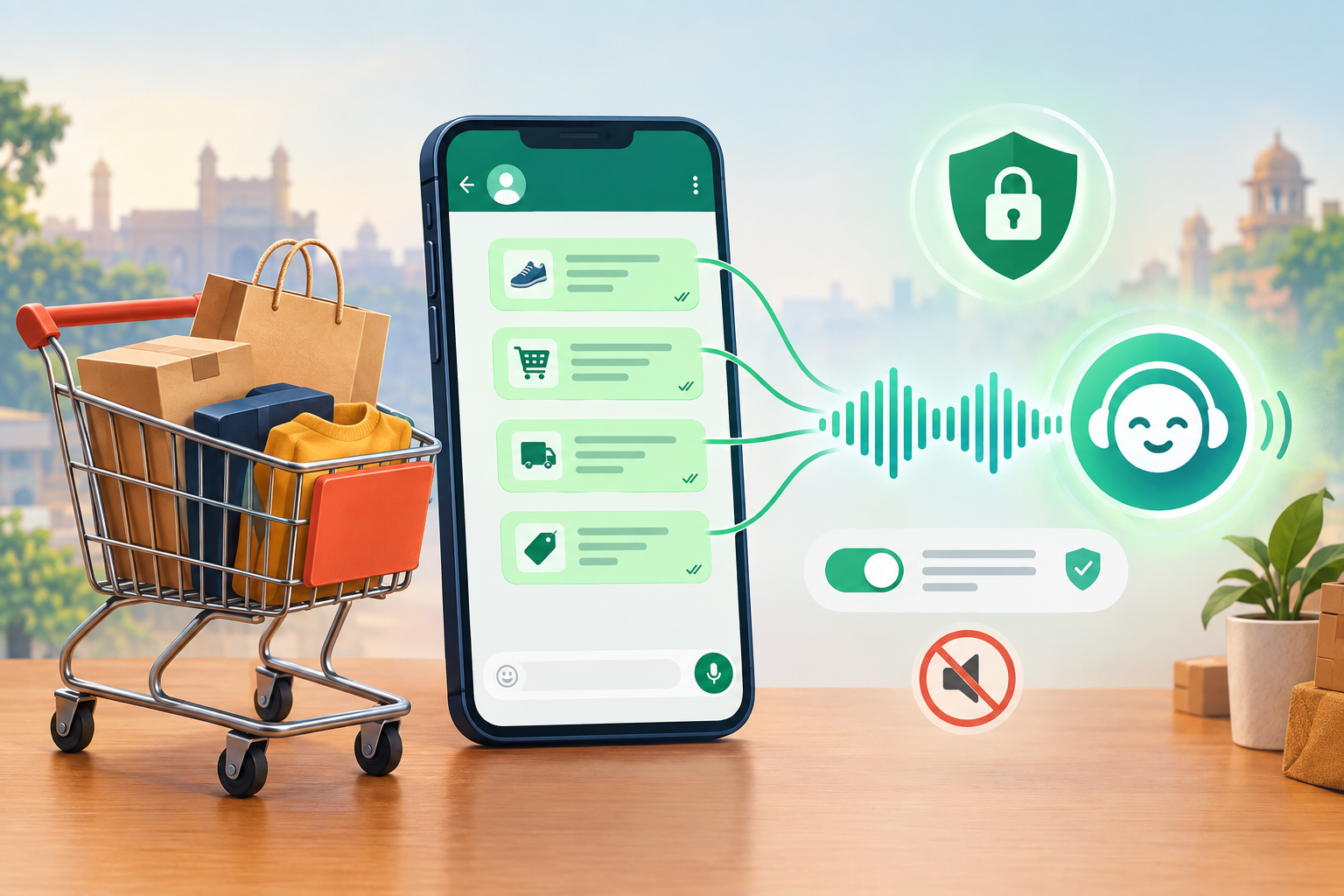
Leaving products in an online shopping cart may increasingly trigger more than a reminder message. Direct-to-consumer brands are beginning to combine WhatsApp campaigns with AI-powered voice calls, creating automated sales journeys that can contact shoppers, answer common questions and encourage them to complete a purchase.
The trend is particularly visible in India’s fast-growing conversational-commerce market. GoKwik, an ecommerce technology company, said in September 2026 that brands using AI calls alongside WhatsApp recovered twice as many abandoned carts as brands relying on WhatsApp-only journeys.
How an AI cart-recovery journey works
The process normally starts when an ecommerce system detects that a shopper entered contact details or reached checkout without placing an order. That event can trigger a sequence managed through a customer-engagement platform.
A brand may first send an approved WhatsApp message showing the abandoned products, an incentive or a checkout link. If the shopper does not respond, the system can initiate an automated voice call, depending on the campaign’s rules and the consent associated with that phone number.
The AI agent receives limited context from the store, potentially including the brand name, cart contents and relevant product or delivery information. Using speech recognition and a generated voice, it can ask why the purchase was not completed and respond to questions about shipping, payment methods, discounts, returns or product availability. The conversation may end with another checkout link being sent through WhatsApp or with a transfer to human support.
Importantly, reports about GoKwik’s system describe voice calls working alongside WhatsApp. That does not necessarily mean every call takes place inside WhatsApp itself. Some deployments may use the regular telephone network while WhatsApp remains the messaging and checkout channel. Meta has separately been expanding calling and AI support for businesses on WhatsApp, including calls that users have requested.
What GoKwik’s figures claim
GoKwik said its findings covered six months of activity across 30 brands using AI Calling through its KwikEngage platform. The company said the platform was handling more than one million calls a month.
According to GoKwik, the combined voice-and-WhatsApp campaigns produced more than ten times the incremental return on spending compared with WhatsApp-only recovery. It also reported average call-answer rates of 60% to 65%, while shoppers engaging through both channels were said to be 2.5 times more likely to complete a purchase than those interacting through only one.
These are company-reported performance figures rather than an independently audited industry benchmark. Results could vary substantially by product category, cart value, customer profile, discounts, call timing and the quality of a brand’s existing messaging campaigns. A comparison between participating brands or campaign periods also does not by itself prove that the voice call caused every additional purchase.
Consent is the central concern
The technology can be convenient when a shopper genuinely wants assistance. It can also feel invasive when someone briefly considers a product and then receives a human-sounding sales call they did not knowingly request.
Brands must consider whether permission to receive a WhatsApp update also covers an automated promotional call. A broad checkbox accepting marketing communications may not clearly tell a shopper that an artificial voice could telephone them. Good practice would include separate, understandable disclosure, identification of the brand and AI agent at the start of the call, reasonable calling hours and an immediate way to opt out.
India’s telecom rules treat unwanted commercial calls and messages as regulated communications. Senders are expected to maintain appropriate registration and consent records, while users can manage preferences, revoke consent and report unwanted communications. The country’s digital-personal-data framework is also being introduced in phases, increasing pressure on businesses to explain what data they collect, why it is used and how permission can be withdrawn.
Further questions arise if calls are recorded, transcribed or analysed. Shoppers should be told whether their speech will be stored, how long records will be kept, which technology providers can access them and whether conversation data will be used to improve AI systems. WhatsApp encryption does not automatically protect information after a business or its service provider receives and stores it in another system.
Should users expect more automated outreach?
Shoppers who share their phone numbers with online brands should expect more experiments combining messages, voice agents and automated support. The economics are attractive to retailers because software can contact large numbers of abandoned carts without maintaining an equally large human calling team.
That does not mean every WhatsApp user will suddenly receive AI sales calls. Campaign reach will depend on local regulation, platform policies, brand practices and whether users have supplied contact details or opted into communication. Meta also allows people to block and report businesses and limits how marketing messages can be initiated.
The likely outcome is a gradual increase rather than an overnight flood: more automated WhatsApp reminders, followed in selected cases by voice outreach for higher-value or higher-intent carts. Whether shoppers view that as useful service or aggressive retargeting will depend largely on transparency, restraint and meaningful consent.