India Warns Pakistan at UN Over Cross-Border Terrorism
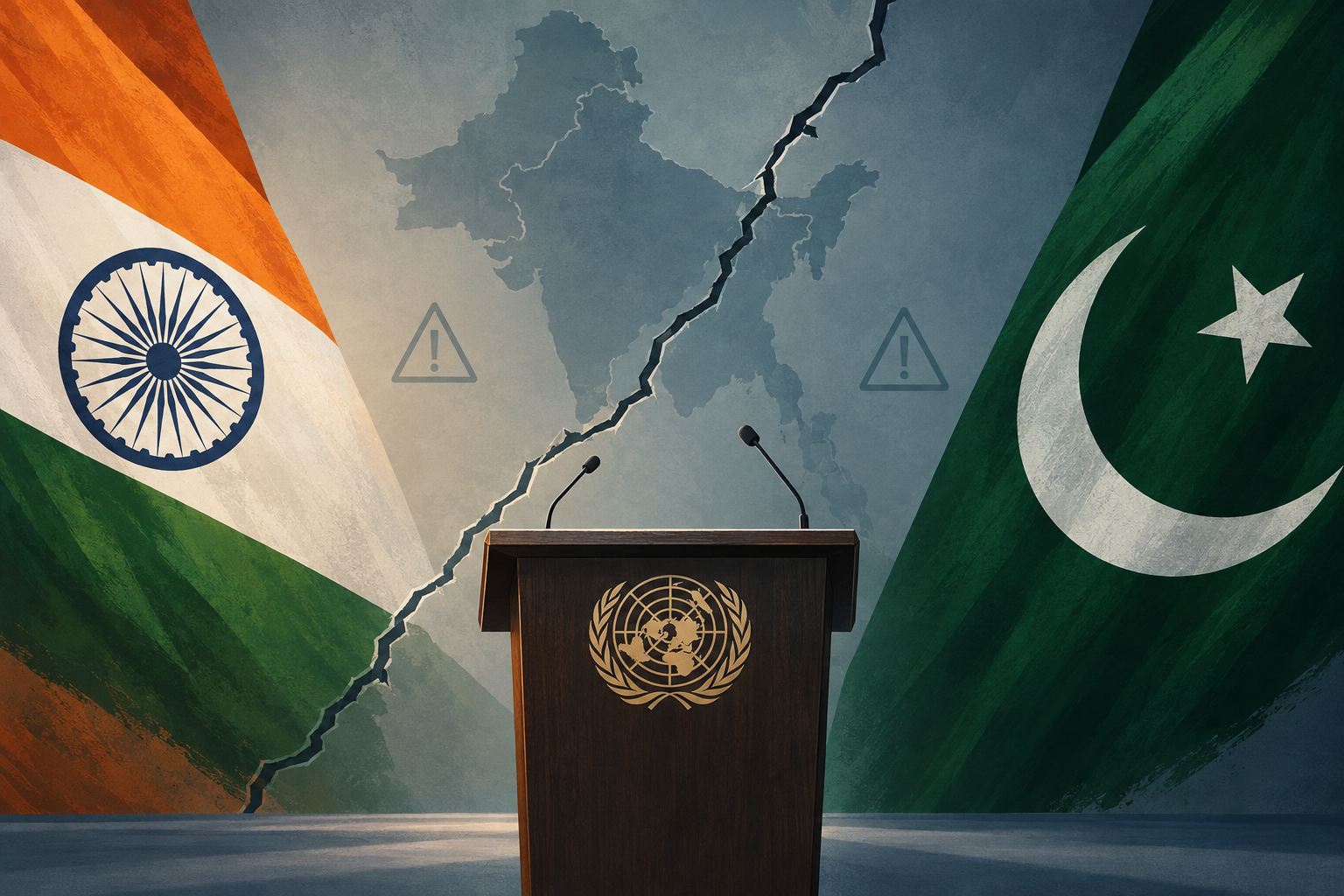
India used its right of reply at the United Nations General Assembly on September 26, 2026, to reject remarks by Pakistan Prime Minister Shehbaz Sharif and accuse Islamabad of pursuing what New Delhi described as a long-standing policy of cross-border terrorism.

Petal Gahlot, First Secretary at India’s Permanent Mission to the UN, said India would continue exercising its right to defend itself against terrorism. She warned that what India characterises as terrorism originating from Pakistan would have consequences.
The allegation and warning represented India’s position. Pakistan has consistently denied sponsoring terrorism against India and has accused New Delhi of using such claims to justify military action and avoid talks on Kashmir.
India responds to Sharif’s address
Gahlot’s intervention followed Sharif’s address to the General Assembly, in which the Pakistani prime minister renewed Islamabad’s demand for a settlement of the Kashmir dispute and pledged continued political, diplomatic and moral support for Kashmiris.
Sharif described Kashmir as central to Pakistan and argued that resolving the dispute was necessary to prevent South Asia from again approaching a wider conflict. Pakistan maintains that Kashmir is disputed territory whose future should be decided through self-determination and relevant United Nations resolutions.
India rejects that position. Gahlot reiterated New Delhi’s assertion that Jammu and Kashmir is an integral and inalienable part of India. She also challenged Pakistan’s record on security, democratic governance, minority rights and conditions in the part of Kashmir administered by Pakistan.
The Himalayan region has been divided between India and Pakistan since 1947, while both countries claim it in full. Their competing positions remain fundamentally opposed, and diplomatic exchanges at the UN frequently produce sharply worded rights of reply.
Warning linked to the 2025 conflict
India’s statement referred directly to the four-day military confrontation in May 2025. That escalation followed the April 22 attack on tourists near Pahalgam in Indian-administered Jammu and Kashmir, in which 26 civilians were killed.
India blamed Pakistan-linked militants for the attack and launched Operation Sindoor on May 7, saying it had struck terrorist infrastructure in Pakistan and Pakistan-administered Kashmir. Pakistan denied involvement in the Pahalgam attack, described India’s strikes as unlawful aggression and responded with military action of its own.
The confrontation included missile and drone attacks, cross-border shelling and strikes on military facilities claimed by each side. It ended with an understanding to halt military action on May 10, 2025, after international concern that the fighting between the nuclear-armed neighbours could escalate further.
India and Pakistan continue to present conflicting accounts of both the fighting and the diplomatic process that ended it. Sharif told the General Assembly that Pakistan had acted in self-defence and credited US President Donald Trump with intervening at a critical moment to prevent an all-out war.
Pakistan has repeatedly praised Trump and other international partners for facilitating de-escalation. India, however, has maintained that the decision to stop military action was reached directly through established communication channels between the Indian and Pakistani armed forces.
Against that background, Gahlot said India had demonstrated during the previous year that those responsible for terrorism would have nowhere to hide. Her warning signalled that New Delhi considers its 2025 military response part of a continuing policy of taking direct action following attacks it attributes to groups operating from Pakistani territory.
Competing security narratives
The exchange highlighted the central dispute shaping India-Pakistan relations. India says meaningful engagement cannot proceed while cross-border terrorism continues. Pakistan says dialogue must include Kashmir and accuses India of avoiding negotiations while applying military and diplomatic pressure.
Sharif’s UN address also raised the Indus waters dispute and warned against any attempt to stop or divert Pakistan’s allocated river water. India has linked cooperation under the Indus Waters Treaty to its broader security concerns, while Pakistan argues that the treaty cannot be suspended unilaterally.
Although both governments invoke peace and regional stability, their UN statements showed that the aftermath of the 2025 conflict remains unresolved. India’s warning, Pakistan’s rejection of New Delhi’s allegations and their incompatible positions on Kashmir leave little indication of an immediate diplomatic opening.