Election Commission enrolment drive: Who can apply after SIR, and how?
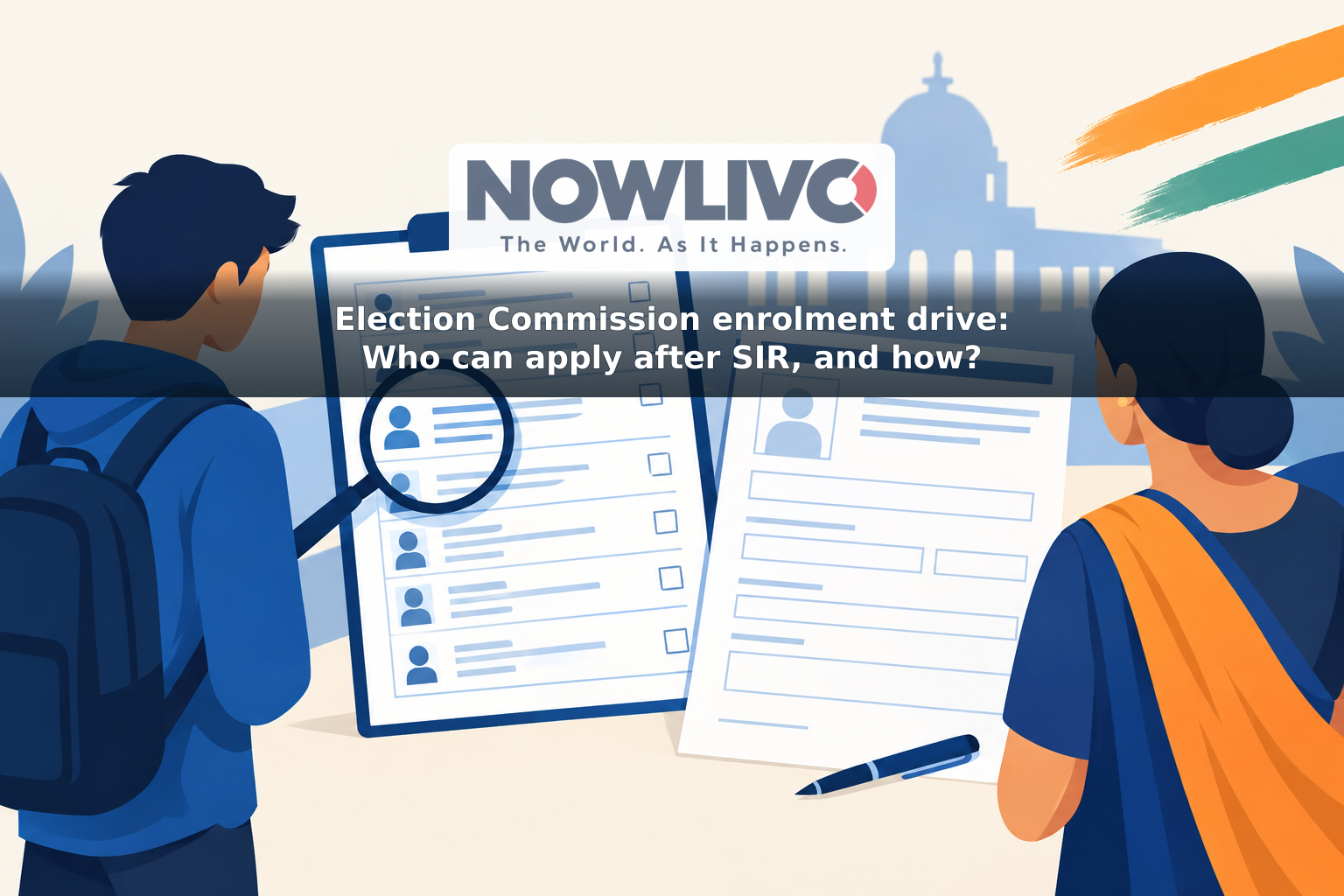
The Election Commission’s special enrolment drive is for eligible people whose names were left off electoral rolls during or after the Special Intensive Revision (SIR), and for young or first-time voters who have not enrolled. It applies in the 20 states and Union Territories where SIR had been completed when the Commission announced the drive on September 26, 2026, including Bihar and West Bengal. Applicants can seek inclusion through the continuing roll-update process; they do not need to wait for another general revision.
Who is eligible?
For an ordinary resident elector, the starting requirements are Indian citizenship, eligibility by age and ordinary residence in the constituency where enrolment is sought. The Commission uses four qualifying dates each year: January 1, April 1, July 1 and October 1. Someone who has turned 18 by the relevant qualifying date may apply, subject to the usual checks. The drive also covers an eligible voter who appeared on an earlier roll but cannot be found on the current one.
The Commission’s September 26 announcement identifies the scope of the drive but does not name all 20 states and Union Territories or set one nationwide camp schedule. Check the notices issued by your state’s chief electoral officer or ask your local election office whether SIR has finished in your area. A claims deadline announced for a state still undergoing revision should not be mistaken for a deadline for this drive.
What should you do first?
Search the current electoral roll before applying. Use the Election Commission’s electoral-search service to look up your name by voter ID number, personal details or registered mobile number, where available. Check the state, constituency, polling station and spelling as well as whether the entry exists. If you previously held a voter ID card, do not assume that possessing the card means your name is on the current roll.
If your entry is present but your address or other particulars need changing, check whether Form 8 is appropriate instead of making a fresh enrolment application. If you cannot find your entry, contact the booth-level officer (BLO) or electoral registration officer (ERO) for your area. A voter who was previously enrolled should explain that history and provide the earlier voter ID number or roll details if available. That helps the officer check whether the name is missing, has moved to another entry or needs an application for inclusion.
How do first-time and left-out voters apply?
The route for adding a name is Form 6, addressed to the ERO for the constituency where the applicant ordinarily lives. It can be submitted through the Commission’s voter-services portal or with help from a local BLO or election office. The Commission has instructed chief electoral officers, district election officers and EROs to run the special drive, rather than leaving eligible people to identify the process on their own.
Form 6 asks for personal details, a photograph, date of birth and present address. Applicants should prepare the supporting age and residence documents specified on the form and make sure the information matches their records. The form provides a way to indicate that an applicant does not have an Aadhaar number. The Commission’s guidance also provides for field verification in certain cases where an otherwise eligible person, including someone without a fixed home, lacks standard residence documents. Ask the ERO what verification is needed rather than assuming that the absence of one document rules out an application.
Read the form’s declaration before submitting it, particularly if you were enrolled before SIR: it asks about previous enrolment, so do not describe yourself as a first-time voter if that is untrue. The Commission has said that the additional declaration used with Form 6 during an active SIR phase is not the form to be used in a non-SIR period. If an online form appears to demand information you cannot answer accurately, seek help from the ERO instead of guessing.
What happens after submission?
Keep the acknowledgement or application number and use it to check progress. Filing Form 6 does not itself put a name on the roll; the ERO must process the application. Search the electoral roll again after a decision and verify your name, address and polling details. If the entry still cannot be found or the application stalls, take the acknowledgement and any earlier voter details to the BLO or ERO. The Election Commission’s voter helpline, 1950, can also help identify the relevant local office.
Finally, check local camp dates rather than relying on dates from another state. The Commission’s September 26 notice directed an immediate drive in SIR-completed areas; it did not announce a single national closing date for these applications. The separately announced October 12 and October 30 claims-and-objections dates concern Maharashtra and Delhi, respectively, and should not be treated as deadlines for every voter covered by the special drive.