All 14 Indians on Yacht off Yemen Coast Reported Safe, Embassy Says
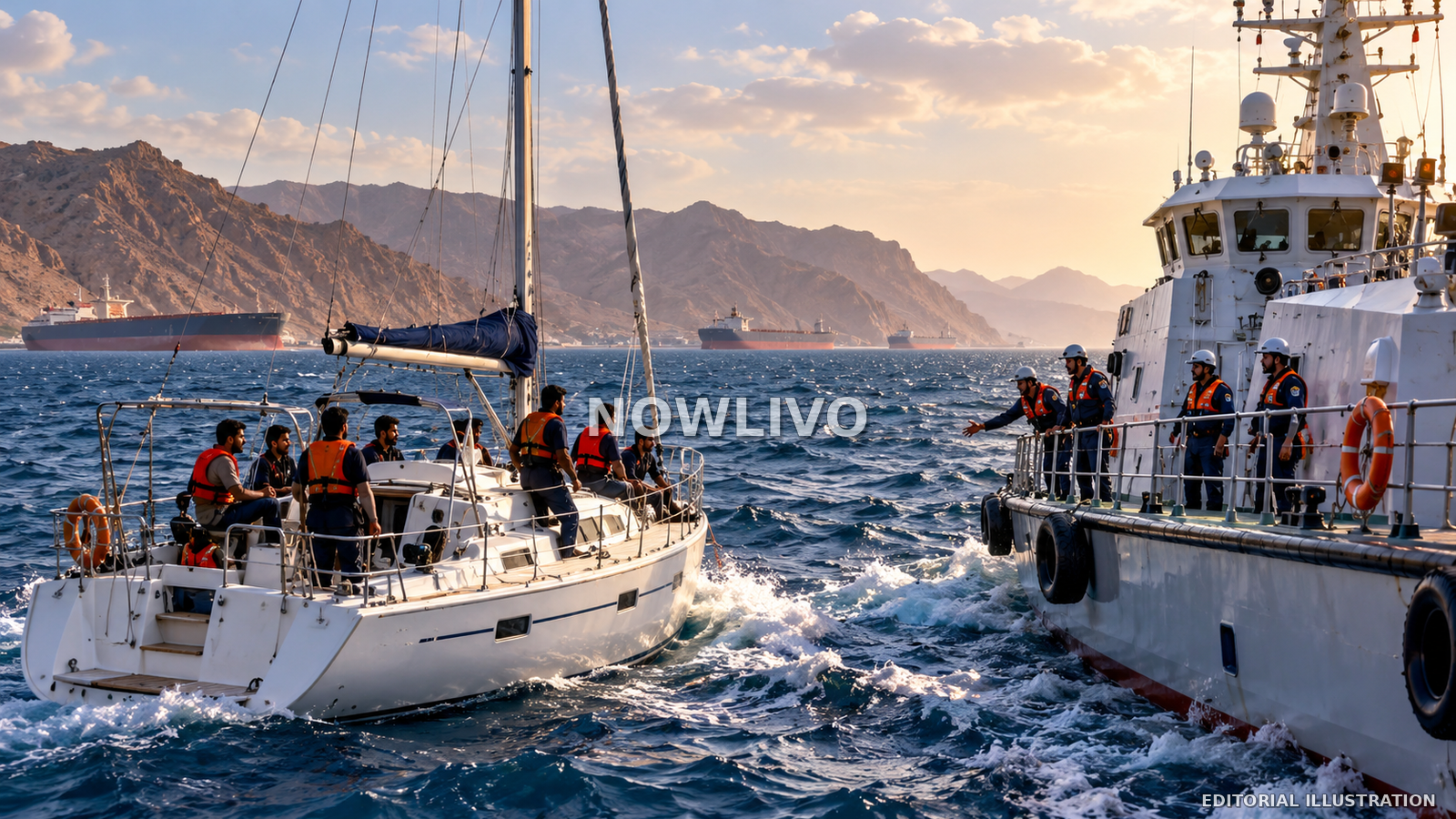
All 14 Indian nationals involved in a yacht incident off Yemen’s coast have been reported safe, the Indian embassy in Yemen said on October 23, offering a measure of relief after conflicting early accounts about the vessel and its circumstances. The embassy said the group was believed to be near Hodeidah and pledged to continue efforts to ensure their well-being. The incident unfolded near Jabal Zuqar island, close to the Bab el-Mandeb Strait, a strategic corridor linking the Red Sea and Gulf of Aden. Important questions remained unanswered in the initial reporting, including the full sequence of events and whether any party’s account of responsibility could be independently confirmed.
What the embassy confirmed
The central confirmed development is the reported safety of all 14 Indian nationals. The embassy had earlier said it lacked precise information about their circumstances and was seeking further details. A later update reduced one major uncertainty, but it did not necessarily close the consular case. Officials may still need to verify the group’s exact location, assess whether anyone needs medical care, establish whether travel documents and personal belongings are intact, and coordinate safe onward movement if required.
In a rapidly changing maritime situation, an embassy’s statement often reflects what officials have been able to verify through contact with local authorities and people connected to the incident. It should not be read as a full forensic account of what happened at sea. The wording is important: confirming that people are safe is a welfare update, while identifying the cause of an incident and determining responsibility are separate tasks that may depend on evidence not yet available publicly.
The competing account of what happened
Yemen’s Iran-aligned Houthi group said it had rescued a boat carrying 14 Indians after an attack near Jabal Zuqar island. The group blamed Saudi Arabia, but Saudi authorities had not responded to Reuters’ request for comment at the time of publication. That claim must remain attributed to the Houthis rather than being presented as an established account. The embassy’s statement about the nationals’ safety did not itself confirm the identity of an attacker or the cause of the incident.
Maritime incidents can involve several different factual questions: the yacht’s precise route, whether it came under fire, which forces were operating nearby, whether a distress call was made and how the passengers were recovered. An account supplied by one party in a regional conflict may contain useful information, but it also needs to be checked against independent records and responses from other parties. Until that work is done, the most accurate coverage keeps the confirmed safety status separate from the dispute over responsibility.
Why the location is strategically important
The Bab el-Mandeb Strait is a narrow passage between the Red Sea and the Gulf of Aden. It connects shipping routes toward the Suez Canal with the Indian Ocean and is important for global cargo and energy movements. Security threats in the surrounding region have forced ship operators to review routes, insurance and crew safety. Even a small yacht near the corridor can encounter a complicated environment involving commercial ships, military patrols and armed groups.
The geography also complicates rescue coordination. Sea conditions, communications, distance from ports and the presence of competing authorities can slow efforts to verify a vessel’s status. A rescue may require coordination among local officials, nearby vessels and diplomatic representatives, none of whom necessarily has access to every piece of information. That makes timely, carefully attributed communication particularly important when nationals are reported missing or involved in an incident at sea.
The wider risks for Indian seafarers
India supplies more than 300,000 seafarers to international shipping fleets, Reuters reported. That exposure means security incidents far from Indian shores can quickly become consular concerns for families and the government. The regional conflict has already created serious risks for civilian and energy infrastructure, and India has condemned attacks that threaten non-combatants. The yacht incident is not identical to the experience of merchant crews, but it illustrates the wider exposure of Indian nationals moving through conflict-adjacent waters.
For seafarers and their families, the uncertainty is often as difficult as the immediate danger. A reliable update needs to clarify whether people have been located, whether they can communicate with relatives and whether there is a realistic plan for safe onward travel. General statements about regional security are useful context, but families need case-specific information from officials rather than unverified names or claims circulated on social media.
What consular assistance can do
Consular support may include verifying identity, arranging contact with family members, explaining local procedures, facilitating travel documents and coordinating with local authorities. It does not mean an embassy controls a rescue operation or can independently investigate all aspects of a maritime encounter. In an area where multiple actors operate and communications can be interrupted, officials may have to wait for confirmation before giving more detailed information.
The embassy’s commitment to continue working for the nationals’ well-being suggests that practical follow-up may still be needed. Relevant questions include whether everyone has access to shelter and medical assessment, whether they have been safely moved from the immediate area and whether any official inquiry is under way. Clear updates from the embassy can reduce speculation while preserving the distinction between facts it has confirmed and claims still being examined.
What evidence would clarify the incident
A fuller account could draw on crew statements, vessel tracking, communications, photographs, damage reports and information from nearby ships or authorities. Not all those materials will necessarily be public, and some may be controlled by parties whose interests differ. Each item needs context: a witness can describe what was seen, while tracking records can help establish where a vessel was, and communications may establish the timing of a distress call.
If a formal inquiry proceeds, investigators will need to establish the vessel’s route, purpose, passengers and the circumstances of any rescue. Those facts could help separate a verified sequence from allegations. At the time of the initial report, the public information did not provide a complete, independently verified explanation of what had happened. It would be premature to convert the Houthi statement into a settled finding or to assume the embassy’s welfare update answers every operational question.
What to watch next
The next useful update will clarify the nationals’ precise location and condition, whether they have left the vessel or area, and whether authorities have begun a formal inquiry. Any statement about who caused the incident should include attribution and a response from the parties involved where available. The broader maritime security environment may remain volatile, but that context should not replace case-specific facts.
For now, the public can take reassurance from the embassy’s statement that all 14 Indians are safe. The cause and responsibility for the incident remain less certain, and the distinction matters in a conflict zone where rival accounts can spread quickly. Consular work often continues after an initial safety alert, particularly when people need assistance getting to a safer location and when investigators still need to establish what happened.