JD Vance’s H-1B Warning Puts Layoffs and Outsourcing Under Closer Scrutiny
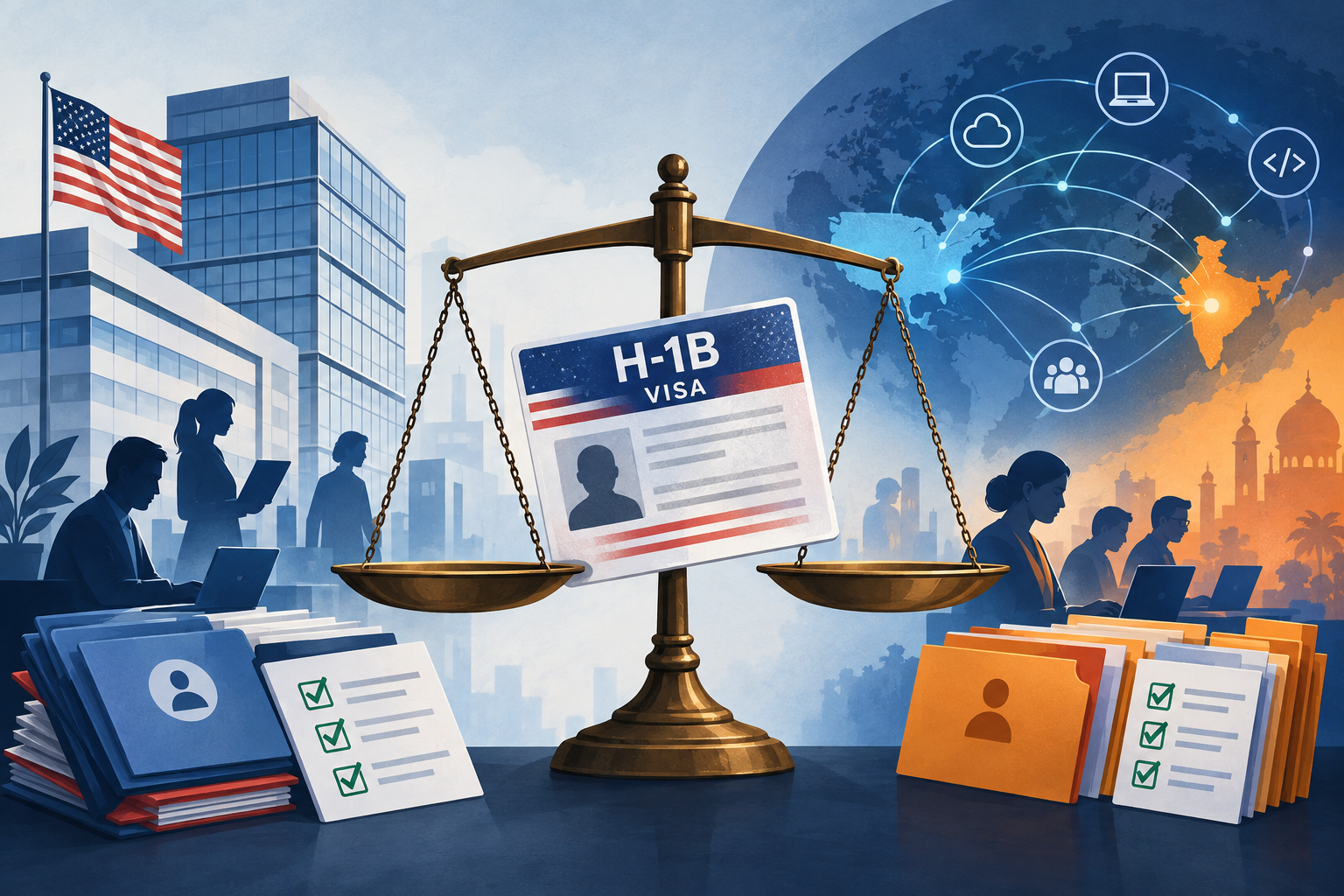
US Vice President JD Vance has delivered a fresh warning to companies using the H-1B programme, declaring that the Trump administration will not allow employers to dismiss American workers and replace them with cheaper foreign labour. His September 24 statement sharpens the administration’s criticism of outsourcing-related hiring and carries particular significance for Indian technology professionals, students and IT services companies.

The warning followed two actions signed by President Donald Trump on September 18. Together, they increase scrutiny of employers with recent or planned layoffs and extend a major financial restriction on certain H-1B petitions involving workers outside the United States.
What has become policy
The new executive order directs the departments of State, Labor and Homeland Security to consider whether an H-1B sponsor directly or indirectly laid off similarly situated US workers during the previous year, or plans layoffs that could affect such employees. This factor may now be examined when the government handles labour condition applications, petitions, visas and admission at the border.
The order does not say that every layoff will produce an automatic rejection. Agencies will still need to determine whether the American and foreign positions are genuinely comparable, whether the employer’s conduct suggests displacement and what consequences are permitted under existing immigration and labour law.
The Labor Department must also begin reviewing information from previously filed labour condition applications within 30 days of the order. That could lead to investigations, requests for records or other action against sponsors whose wage data, job descriptions or employment practices raise compliance concerns.
A separate proclamation extended until September 21, 2027, a $100,000 payment requirement for certain H-1B petitions involving people outside the United States who need admission to begin the sponsored employment. National-interest exceptions remain possible. The measure is not a blanket charge imposed on every existing H-1B worker, and the proclamation does not automatically revoke visas already held by people working in the country.
A wage-weighted selection system favouring higher-paid and higher-skilled cap registrations is also already in effect for the fiscal year 2027 season. By contrast, the Labor Department’s wider plan to revise prevailing-wage calculations remains a proposed rule unless and until a final version is issued.
Why outsourcing is central to the criticism
The Trump administration argues that some staffing and outsourcing businesses have used H-1B employees at client sites before transferring parts of the work overseas. It also alleges that certain companies have sought large numbers of foreign workers while cutting comparable positions in the United States.
These are the administration’s stated justifications for tighter controls, not findings that every outsourcing company or H-1B sponsor has violated the law. Employers are already required to pay an H-1B professional at least the higher of the applicable prevailing wage or the actual wage paid to similarly qualified workers. Additional displacement-related requirements have also long applied to some H-1B-dependent employers and recognised violators.
Vance’s description of lower-cost foreign labour is therefore broader political messaging. His statement does not, by itself, create a new visa category, cancel approvals or prohibit all employers that conduct layoffs from sponsoring skilled professionals.
Who may feel the greatest impact
IT staffing firms, third-party placement businesses and employers sponsoring foreign workers while reducing similar US teams face the clearest risk of enhanced review. Lower-wage and entry-level filings may also become less competitive under the weighted selection system.
Indian professionals are especially exposed because they form the largest national group participating in the H-1B programme. Applicants recruited directly from India may encounter fewer offers if employers are unwilling to absorb the additional payment or compliance burden. Indian students in the United States moving from Optional Practical Training to H-1B status could see employers favour more senior, specialised and higher-paid roles.
Current H-1B employees are not subject to collective cancellation under the latest announcements. However, a transfer, amended petition, visa appointment or future entry may involve closer examination of the sponsor, role, wage, worksite and relationship with any end client.
What workers and employers should watch next
- Agency instructions: Operational guidance will show how layoffs are connected to individual petitions and what evidence sponsors must provide.
- Enforcement activity: Labor Department reviews may reveal which wage levels, industries and business models receive priority.
- The proposed wage rule: A final rule could materially increase salary floors and the cost of sponsorship.
- National-interest exceptions: Employers should monitor how narrowly exemptions from the $100,000 payment are applied.
- Legal challenges: Court cases could affect the reach or implementation of the executive actions.
For now, Indian professionals should verify whether an offer involves consular entry, direct employment or placement at a client site and should retain clear records of duties, qualifications, wages and worksites. US employers should document the business reasons for layoffs, compare proposed H-1B jobs with eliminated positions and avoid treating Vance’s warning as mere rhetoric. The political language is sweeping, but parts of the administration’s crackdown are already binding policy.