US and Iran Explore Phased Plan to Reopen Strait of Hormuz
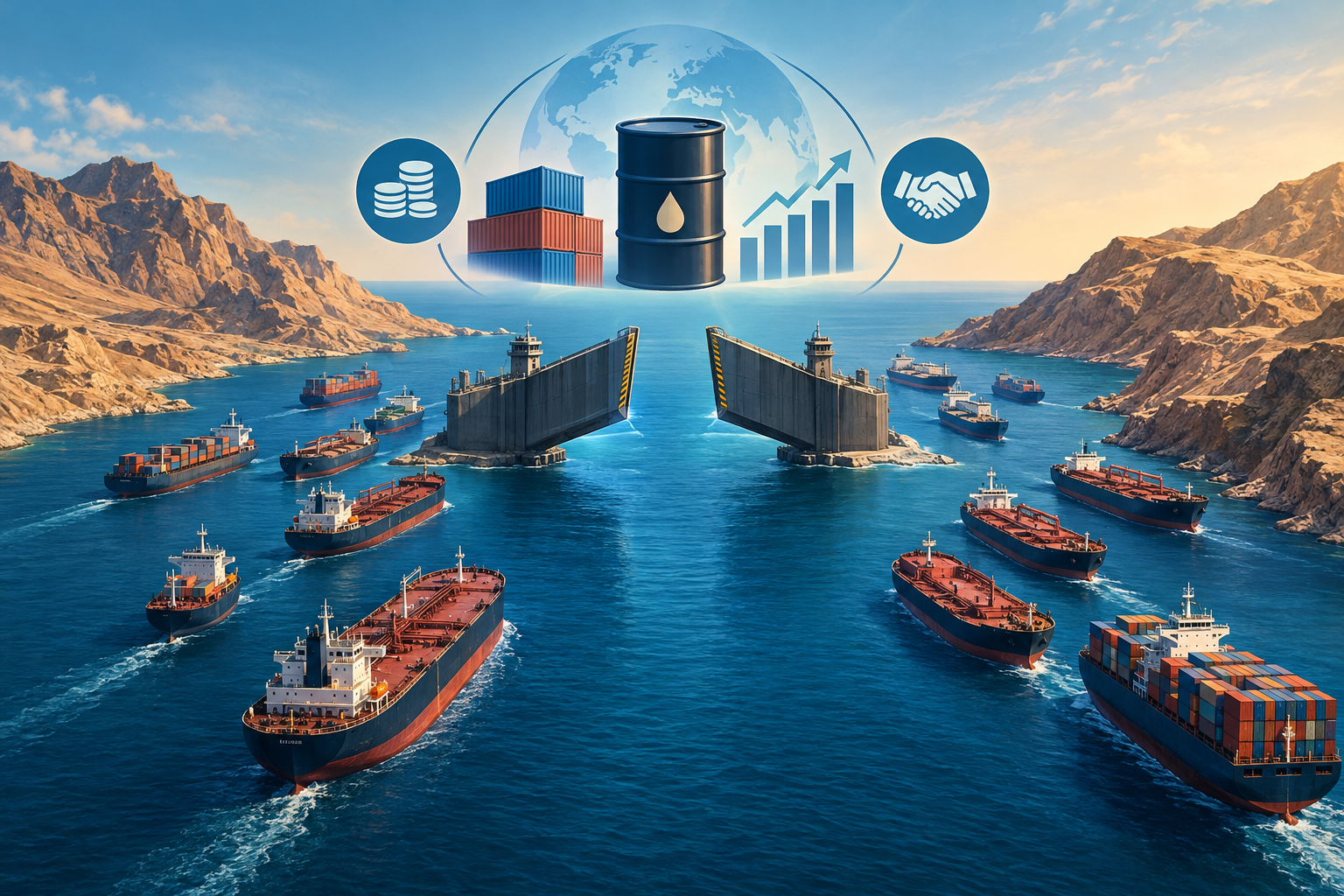
US and Iranian negotiators are exploring a phased arrangement aimed at reopening the Strait of Hormuz and easing Washington’s economic blockade of Iran, according to officials familiar with discussions taking place in New York.

The proposal is an exploratory framework, not a concluded agreement. No final terms have been announced, and the two governments remain divided over which side must act first, how concessions would be verified and whether an initial exchange could lead to a lasting settlement.
Why the Strait of Hormuz matters
The Strait of Hormuz is a narrow passage between Iran and Oman that connects the Persian Gulf to the Gulf of Oman and the Arabian Sea. Before the current disruption, about 20 million barrels a day of crude oil and petroleum products moved through it, representing roughly a quarter of globally traded seaborne oil.
The route is essential for exports from major Gulf producers, including Saudi Arabia, the United Arab Emirates, Iraq, Kuwait, Qatar, Bahrain and Iran. Although Saudi Arabia and the UAE have pipelines capable of bypassing the strait, those alternatives can carry only a portion of the volumes normally shipped through the waterway.
Hormuz is also vital to the liquefied natural gas market. Qatar and the UAE together previously sent volumes representing almost one-fifth of global LNG exports through the passage. Fertilizer and other commercial cargoes use the same route.
Any restriction therefore affects more than the immediate supply of oil and gas. Tanker availability tightens, war-risk insurance premiums rise and shipowners demand higher freight rates. Those costs can feed into fuel, electricity, manufacturing, transport and food prices. Even expectations of a reopening can move markets because traders may anticipate a larger and more reliable supply of energy.
What Iran is reportedly seeking
Tehran’s immediate priority is relief from the US blockade of Iranian ports, which has sharply restricted its oil exports and access to hard currency. Iranian officials have indicated that navigation through Hormuz could resume as part of a reciprocal first phase in which Washington begins lifting the blockade and reducing military pressure.
Iran is also seeking possible access to frozen assets and wants a broader process for addressing the conflict. A road map discussed through mediators reportedly includes a temporary regional ceasefire and a timetable for more substantial negotiations.
Another sensitive issue is authority over the strait. Iran has sought to preserve what it describes as an administrative role in the waterway. It has also raised the possibility of transit payments, although officials familiar with the talks say Tehran may be prepared to move that demand out of the main arrangement and address it separately.
What Washington wants
The United States is seeking dependable freedom of navigation for commercial shipping, without Iran using access to the strait as leverage or imposing compulsory transit fees. Washington also wants evidence of Iranian compliance before surrendering the economic pressure created by the blockade and additional sanctions.
A reopening could help contain global oil prices and reduce pressure on US gasoline costs before the November 3 congressional midterm elections. However, the White House has maintained that Iran must demonstrate sufficient goodwill before major restrictions are lifted.
Gulf governments are pressing for both outcomes: an end to the confrontation and the restoration of unrestricted navigation. They oppose lasting Iranian control over access to Hormuz but are also wary that continued military pressure could trigger a broader regional conflict.
Diplomacy at the UN General Assembly
The annual gathering of world leaders in New York has created an unusual opportunity for indirect diplomacy. US and Iranian representatives have held exchanges through mediators, with Qatar, Pakistan and Egypt involved in efforts to narrow the differences.
The setting allows senior officials from both sides, Gulf governments and other interested powers to communicate rapidly without requiring a politically difficult presidential meeting. It also places the Hormuz dispute within wider discussions about regional ceasefires, maritime security and Iran’s relationship with its Arab neighbours.
Why implementation would be difficult
The central problem is sequencing. Washington wants Iran to reopen the strait before receiving substantial economic relief. Tehran wants the blockade eased before giving up its strongest bargaining tool. Neither side wants to make the first move and risk receiving nothing in return.
Trust is another major obstacle. An earlier temporary understanding collapsed in July, leaving negotiators to consider verification measures, deadlines and consequences for violations. Restoring normal traffic would also require practical arrangements involving naval activity, port access, insurers, shipping companies and guarantees for commercial vessels.
Disputes over transit fees, frozen assets, sanctions, military operations and Iran’s claimed authority in Hormuz could derail even a limited exchange. Gulf states may also resist any formula that appears to legitimize the use of an international shipping route as a bargaining instrument.
For now, the discussions represent a possible diplomatic off-ramp rather than a peace settlement. A phased approach could allow each side to test the other’s intentions through smaller reciprocal steps, but the distance between an exploratory proposal and a durable reopening of the Strait of Hormuz remains substantial.