
Congress Protests Escalate Demand for CEC Gyanesh Kumar’s Resignation
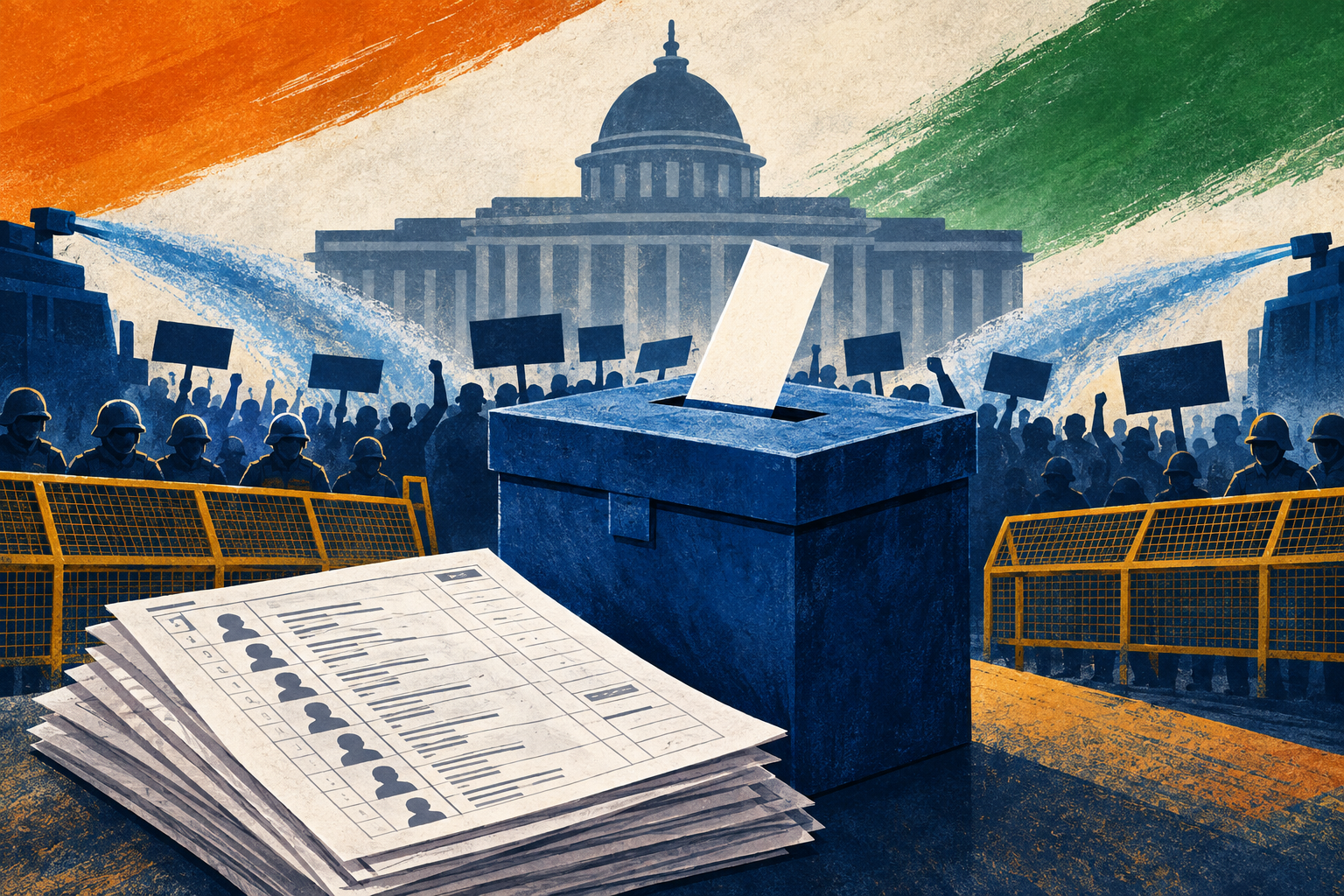
Congress workers took to the streets across India on Friday, September 25, demanding the resignation or removal of Chief Election Commissioner Gyanesh Kumar amid a widening political dispute over the Special Intensive Revision, or SIR, of electoral rolls.

Demonstrations were held in New Delhi, Lucknow, Guwahati, Chandigarh, Patna, Bhopal, Kolkata and other cities. Police detained senior state leaders at several locations and used water cannons against protesters in Chandigarh and Patna as marchers attempted to move towards election offices or other restricted areas.
Marches stopped by police
In Delhi, Congress workers led by the party’s city unit president Devender Yadav marched from the Delhi Pradesh Congress Committee office towards the Election Commission headquarters. Police erected barricades, stopped the procession and detained Yadav and other leaders. The party said they were taken to a police station and subsequently released.
A separate demonstration at Jantar Mantar drew members of the Indian Youth Congress, student organisations and other groups. Police detained several participants after protesters attempted to march towards the poll panel’s headquarters.
In Lucknow, protesters led by Uttar Pradesh Congress president Ajay Rai, Congress Legislature Party leader Aradhana Mishra and party general secretary Rajendra Pal Gautam were stopped near the state Congress office. Workers climbed barricades amid heavy rain, leading to scuffles with police. Congress leaders said hundreds of participants were taken to Eco Garden before being released later in the day.
Assam Congress president and Lok Sabha member Gaurav Gogoi was detained during a demonstration in Guwahati. Punjab Congress president Amarinder Singh Raja Warring was among the leaders participating in the Chandigarh mobilisation, where police deployed water cannons to prevent protesters from advancing.
What Congress is alleging
The protests followed the disclosure of internal written objections attributed to Election Commissioners Sukhbir Singh Sandhu and Vivek Joshi. The records indicated that the two commissioners raised concerns on multiple occasions over decisions involving voter registration, deletion and restoration of names, access to electoral-roll databases and administrative control of election technology.
Among the disputed matters was a change to Form 6, which is used by citizens applying for inclusion in an electoral roll. The internal objections reportedly questioned whether the form could be modified without an amendment to the applicable rules. Concerns were also raised about the centralisation of electoral-roll systems and whether local Electoral Registration Officers retained sufficient control over voter data.
Congress has interpreted the objections as evidence that important steps were taken without the approval of the full three-member Election Commission. Its leaders have accused Kumar and the poll panel of favouring the BJP and have repeatedly used the phrase “vote theft” to characterise alleged wrongful additions and deletions from voter lists.
These remain allegations made by Congress and other opposition parties. They have not established that electoral outcomes were altered, and the Election Commission has denied acting improperly.
Election Commission rejects opposition claims
The Election Commission said written observations, operational questions and technical suggestions are normal parts of decision-making within a multi-member constitutional institution. It maintained that the SIR and other final decisions were approved unanimously by the full Commission and followed the required legal procedures.
The poll panel also argued that focusing on selected internal notes did not reflect the broader deliberative process. According to the Commission, differing views may be recorded while proposals are being considered, without necessarily amounting to dissent against the final decision.
Under the law governing the Election Commission, its business should be conducted unanimously as far as possible. When the commissioners differ, a matter is decided according to the majority view. The Chief Election Commissioner is the presiding member but cannot unilaterally override the other two commissioners.
BJP calls campaign political
The BJP rejected the Congress campaign as political posturing. Party representatives said internal discussions and file-based objections demonstrate institutional deliberation rather than wrongdoing. BJP spokespersons also argued that the opposition was attempting to discredit the electoral system instead of following formal procedures for challenging voter-roll decisions.
Some BJP-led National Democratic Alliance partners, however, urged the Election Commission to provide a fuller public clarification so that questions about the SIR and the reported internal objections do not weaken public confidence.
Congress said the state-capital protests were only the beginning of a broader campaign. The party is preparing further district-level demonstrations and is expected to discuss its next steps at a Congress Working Committee meeting, keeping the dispute over electoral rolls and the independence of the Election Commission at the centre of its national opposition strategy.