
Edible Oil Duty Cut: What Changes for Prices, Refiners and Households
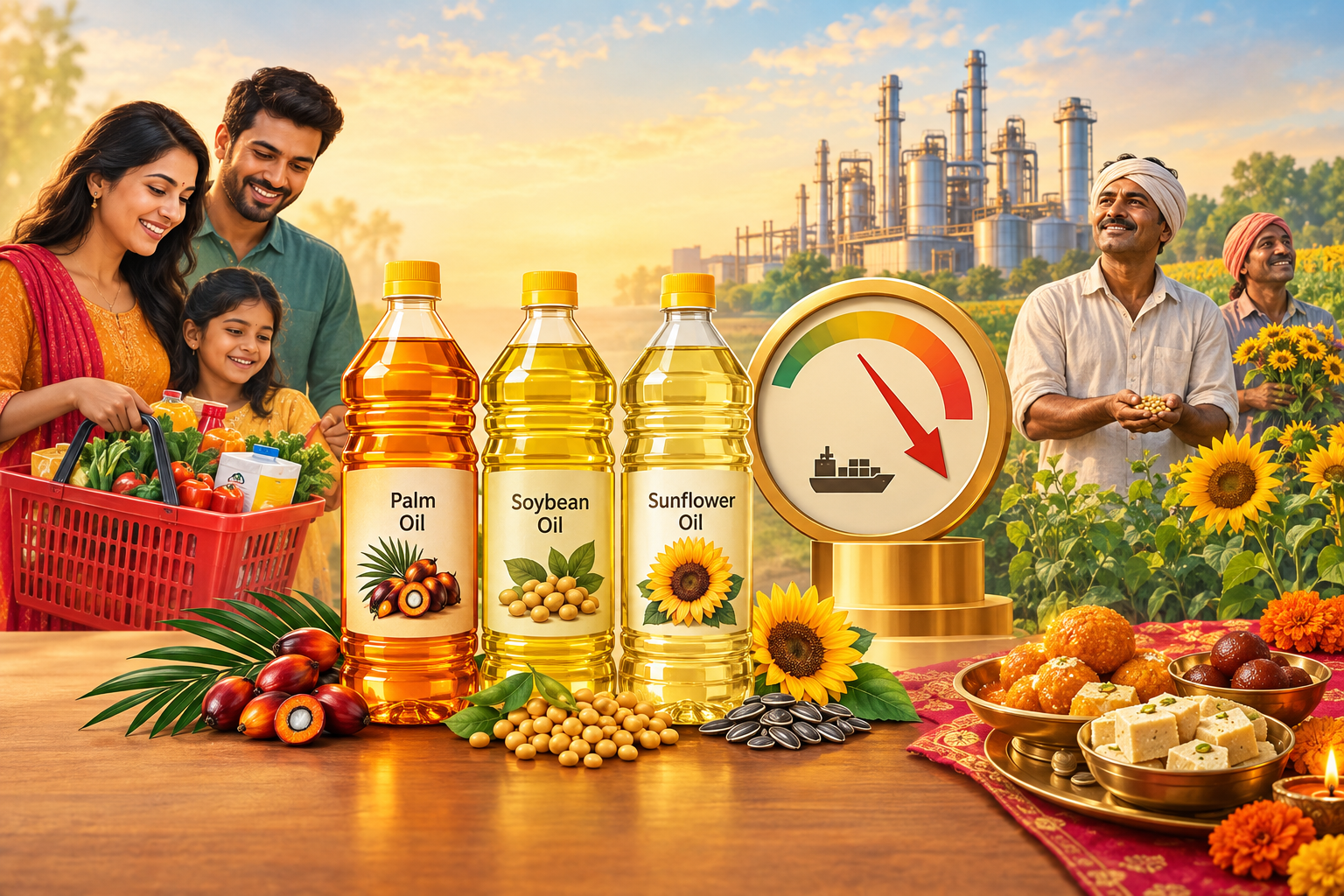
The Centre has reduced customs duties on major imported edible oils in an effort to lower landed costs, protect households from rising cooking-oil prices and limit inflation during the festive shopping season.

The revised structure took effect on September 24, 2026. It covers crude and refined varieties of palm, soybean and sunflower oil, although the largest reduction applies to crude sunflower oil.
What the government has announced
- Crude palm oil: Basic Customs Duty has been reduced from 10% to 5%.
- Crude soybean oil: Basic Customs Duty has been reduced from 10% to 5%.
- Crude sunflower oil: Basic Customs Duty has been reduced from 10% to nil.
- Refined palm and soybean oils: The basic duty has fallen from 32.5% to 27.5%.
- Refined sunflower oil: The basic duty has been lowered from 32.5% to 22.5%.
These are the announced basic customs rates. The total import charge can also include applicable cesses and surcharges, so the headline BCD should not be treated as the entire tax payable on every shipment.
The government has retained an effective import-duty gap of 19.25 percentage points between crude and refined oils. This makes importing crude oil for processing in India more attractive than bringing in fully refined products, supporting domestic refineries and value addition.
The Department of Food and Public Distribution has asked edible-oil companies and industry associations to revise distributor prices and maximum retail prices in line with the reduction in import costs. That instruction establishes the government’s intended outcome, but it does not fix a compulsory nationwide retail price or a guaranteed reduction per litre.
What may happen at shops
No specific retail-price decline has been officially guaranteed. The immediate effect of the decision is a lower tax burden on qualifying imports arriving under the new structure. Whether shoppers see cheaper bottles, pouches or tins depends on how quickly importers, refiners, distributors and retailers transmit that saving.
Companies may initially hold back planned price increases rather than immediately cutting existing sticker prices. Some businesses had been considering increases of around 7% to 8% to offset higher international prices and import expenses. The duty reduction could help absorb part of that pressure.
A visible decline may also take time because oil already in warehouses or moving through distribution networks could have been purchased under the earlier duty structure. Global commodity prices, the rupee’s exchange rate, freight and insurance costs, packaging expenses and retail margins will continue to influence the final price.
Sunflower oil has received the deepest duty reduction and could therefore experience stronger downward pressure than palm or soybean oil, other factors remaining equal. However, a rise in global sunflower-oil prices or a weaker rupee could offset part of the tax benefit.
Impact on consumers and festive inflation
Cooking oil accounts for a recurring share of household food spending and is also widely used by restaurants, sweet makers, snack manufacturers and caterers. Any moderation in prices could therefore provide direct relief in home kitchens and reduce cost pressure across festive food production.
The timing is significant because demand for fried snacks, sweets and prepared foods generally strengthens during the festival period. Lower import costs may prevent a further spike and soften edible oil’s contribution to food inflation. The measure is more likely to act as an inflation cushion than to produce an immediate, dramatic fall across all grocery shelves.
Mixed implications for domestic producers
Indian refiners are positioned to benefit from cheaper crude-oil imports and the continued tariff advantage over refined imports. The duty gap encourages processing within the country and may improve capacity utilisation at domestic refineries.
The outlook is less straightforward for oilseed farmers and domestic crushers. Less expensive imported oil can place downward pressure on locally produced oils and, in turn, on oilseed prices. Soybean and sunflower growers could face greater import competition if international supplies become substantially cheaper.
The policy therefore involves a trade-off: consumers and refiners gain from lower import costs, while growers may require support if cheaper imports weaken domestic crop realisations. The eventual balance will depend on global prices, the size of the upcoming oilseed harvest and how effectively the retail industry passes on the tax saving.
Bottom line
The confirmed change is a reduction in customs duties from September 24. Lower retail prices are a likely objective and a reasonable possibility, not an automatic result. For households, the first practical sign of the policy working may be stable prices during peak festive demand, followed by selective MRP reductions as newer, lower-duty supplies move through the market.