
Netanyahu Warns Iran as Delegates Walk Out of UN Speech
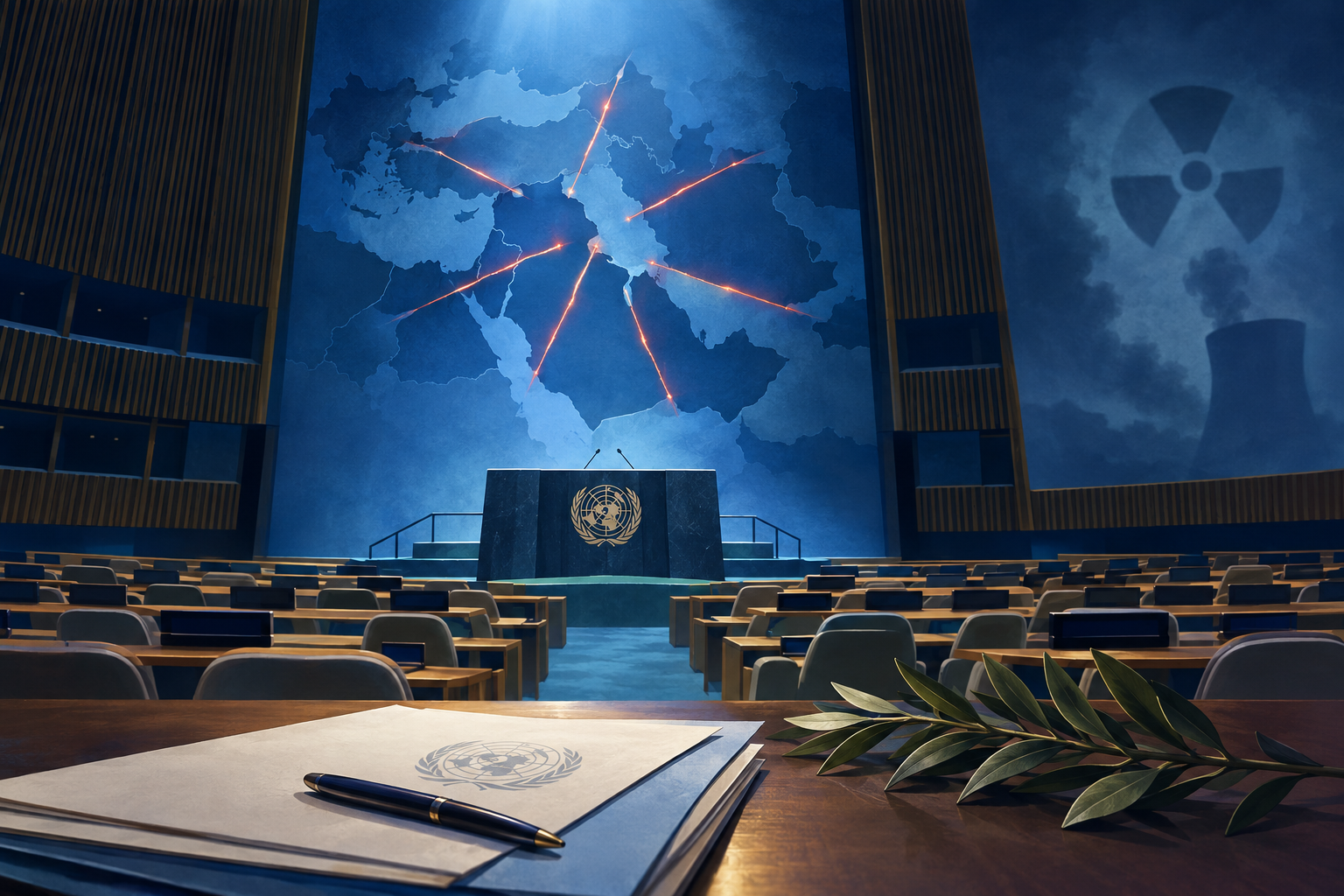
Israeli Prime Minister Benjamin Netanyahu used an address to the United Nations General Assembly to defend Israel’s military campaign against Iran, portray the country as engaged in a seven-front war and confront an international audience increasingly divided over his government’s actions.

The speech was delivered in New York on Thursday, September 24, although much of the international coverage appeared on September 25. As Netanyahu approached the podium, scores of delegates reportedly left the General Assembly hall. The Palestinian mission had encouraged delegations to participate in the protest, which followed a similar walkout during Netanyahu’s address the previous year.
Netanyahu denounced those who departed as “moral cowards,” arguing that Israel’s military operations were protecting countries beyond its own borders. Supporters remaining in the chamber applauded at several points, creating a sharp visual contrast between the empty seats and the vocal Israeli delegation and its allies.
Warning focused on Iran
Iran was central to Netanyahu’s address. He presented the Islamic Republic as the primary strategic threat facing Israel and said preventing Tehran from developing nuclear weapons was essential to Israeli and global security. He described the decision to attack Iran as one of the easiest he had made, claiming that failure to act would have placed Israel and others in mortal danger.
Those statements represented Netanyahu’s assessment of Iran’s capabilities and intentions. Iranian leaders maintain that the country’s nuclear program is intended for peaceful purposes and have characterized Israeli and American military action as unlawful aggression. The dispute over Iran’s nuclear activities has remained a major source of confrontation involving Tehran, Israel, the United States and international nuclear inspectors.
Netanyahu also addressed the Iranian public, predicting that popular pressure would eventually overcome the country’s leadership. Holding up a satellite internet device, he argued that wider access to information could help Iranians challenge government censorship. Tehran has repeatedly accused Israel and the United States of seeking regime change, while Israeli leaders say their campaign is directed at security threats rather than the Iranian population.
A claimed seven-front conflict
The prime minister said Israel had spent three years fighting on seven fronts. He grouped together Hamas in Gaza, Hezbollah in Lebanon, the Houthis in Yemen, Iran, armed groups in Iraq and Syria, and Palestinian militants in the occupied West Bank, which he referred to by the biblical names Judea and Samaria.
Netanyahu’s framing presents these conflicts as interconnected parts of an Iranian-led effort to destroy Israel. Iran has provided varying forms of political, financial or military support to several of the groups he named. However, the organizations operate in different countries, have distinct local objectives and are not necessarily directed as a single military structure. Iran and its partners also dispute Israel’s description of their actions and argue that they are responding to Israeli occupation or regional attacks.
The seven-front formulation allowed Netanyahu to cast Israel’s campaigns as a single struggle for national survival. His critics argue that the framing minimizes differences between separate conflicts and is used to justify open-ended military action across the region.
Walkout reflects wider diplomatic divide
The protest inside the chamber unfolded against continuing international criticism of Israel’s conduct in Gaza and the occupied West Bank. Palestinian leaders, rights organizations and several UN-linked investigators have accused Israel of grave violations, including acts they say may constitute genocide. Israel rejects that allegation, says it targets armed groups rather than civilians and accuses Hamas of operating within populated areas.
Netanyahu used the speech to dismiss genocide accusations and attack governments and political figures he said had accepted false claims about Israel. Palestinian Authority President Mahmoud Abbas, speaking to the assembly by video, presented a sharply different position, accusing Israel of undermining Palestinian statehood and urging renewed international support for a two-state settlement.
The walkout carried no binding diplomatic consequence, but it demonstrated the scale of opposition Netanyahu faces at the United Nations. Israel continues to receive strong backing from the United States, even as many other governments press for limits on military operations, greater protection for civilians and a political route out of the regional crisis.
Netanyahu’s address offered little indication that Israel planned to narrow its objectives. Instead, he presented continued military pressure as necessary for survival, leaving the General Assembly with competing accounts of who is responsible for the region’s expanding wars and how they might end.