
Google Photos Wardrobe reaches India: How the AI closet works
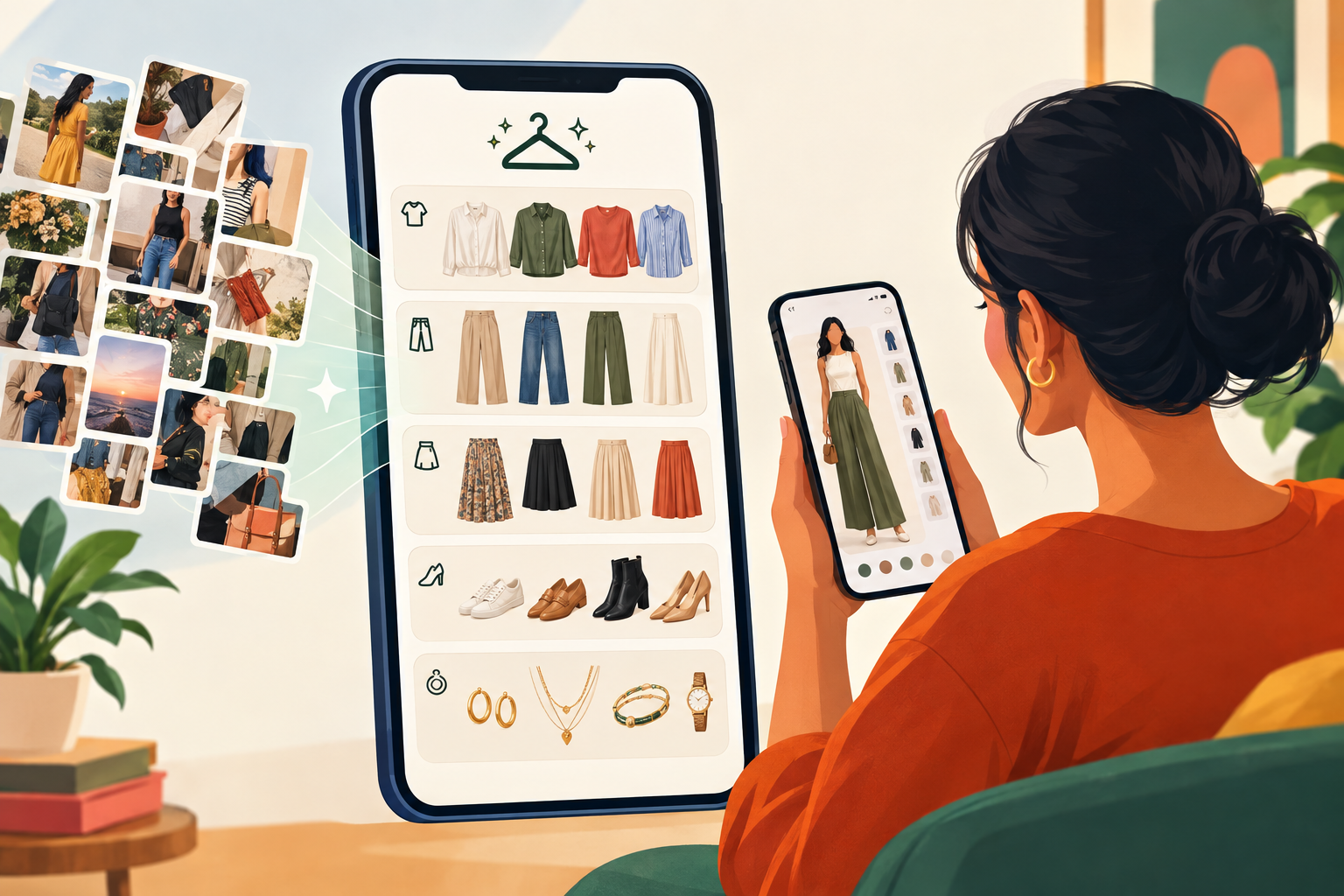
Google Photos has expanded its AI-powered Wardrobe feature to eligible Android and iOS users in India, offering a new way to rediscover clothes, assemble outfits and preview combinations without manually photographing every item in a closet.

As of September 24, 2026, Wardrobe is officially available to all eligible users in India, Brazil and the United States. That is broader than its earlier phased rollout to Google AI Pro and Ultra subscribers and selected accounts. However, “all eligible users” does not mean every Google Photos account will automatically qualify or immediately display the tool.
How Google Photos builds a digital wardrobe
Wardrobe works with pictures already stored in a user’s Google Photos library. After setup, the service scans photos of the account holder from the previous four years and identifies visible garments and accessories. It then extracts those items into a dedicated collection.
Users can browse clothing separately, sort items by when they were recently worn and filter the collection into categories such as tops, bottoms and skirts. This could help surface clothes that have not been worn recently or remind users how they previously styled a particular item.
To begin, open the latest Google Photos mobile app and go to Collections > Wardrobe > Build my wardrobe. Processing may take time because the service must examine the relevant photos. Google Photos sends a notification when the collection is ready.
Creating outfits and using virtual try-on
Wardrobe lets users combine as many as six catalogued items into an outfit. A combination can be named, saved or shared. Users can also create separate sets of looks for occasions such as work, travel or celebrations.
The current feature is better described as a digital styling workspace than a fully autonomous personal stylist. It helps users explore combinations from the detected clothing collection, but Google’s published instructions focus on users selecting the individual pieces themselves rather than the AI automatically deciding what they should wear.
For a virtual preview, open an existing outfit or create a new one and tap Try it on. Wardrobe generates a synthetic visual showing the account holder in the selected combination. The output can be regenerated, saved as a video or shared with other people.
This function is separate from Google’s shopping-focused try-on tool for retailer listings. Wardrobe is designed around clothes detected in the user’s own photo library rather than products currently being sold online.
Who can use Wardrobe in India?
Users need an eligible Google Account that meets the applicable minimum-age rules, and the account must be located in a supported country. Face Groups must be enabled, and the user must identify which detected face belongs to them.
Most non-subscribers also need more than 1,000 photos of themselves in Google Photos. That photo-count requirement is waived for Google AI Pro and Ultra subscribers. On Android, the phone must run Android 10 or newer. Wardrobe is also available through the current Google Photos app on iPhone and iPad; the latest iOS app requires iOS or iPadOS 18 or later.
A paid AI subscription is therefore not universally required. Nevertheless, an Indian user may still be ineligible if Face Groups is disabled, the library contains too few pictures of them, the account does not meet age requirements or the device cannot run a compatible app version. Server-side activation can also mean the option takes time to appear after an app update.
Privacy and storage considerations
Using Wardrobe requires Google Photos to analyse personal images associated with the user’s face group, including clothing visible in photos taken over several years. Anyone uncomfortable with that level of automated photo analysis should consider the requirement before enabling the feature.
Google says information about a user’s clothing and style is not shared with retailers or other third parties. Its Google Photos privacy terms also state that personal Photos data is not used for advertising or to train generative AI models outside Google Photos. Users remain responsible for anything they deliberately share from Wardrobe.
Individual clothing entries can be deleted from the Wardrobe collection. Saved outfits and generated try-on outputs count against the storage shared by Google Photos, Gmail and Google Drive, so repeated creations may matter for accounts close to their storage limit.
What the AI cannot reliably do
Wardrobe can only catalogue clothing that appears clearly in available photos. Items that were never photographed, were hidden under another layer or appeared in poor lighting may be missed or classified incorrectly. Conversely, the collection may include clothes that the user has since sold, donated or discarded.
The virtual try-on is an AI-generated approximation, not proof of real-world fit. It may change patterns, colours, garment details, body proportions or personal features. It also cannot confirm sizing, comfort, fabric quality or how clothing will behave during actual movement. Users should treat the output as inspiration and a rough visual preview rather than an accurate fitting-room replacement.