Pakistan Strikes Afghan Provinces as Kabul Warns of Retaliation
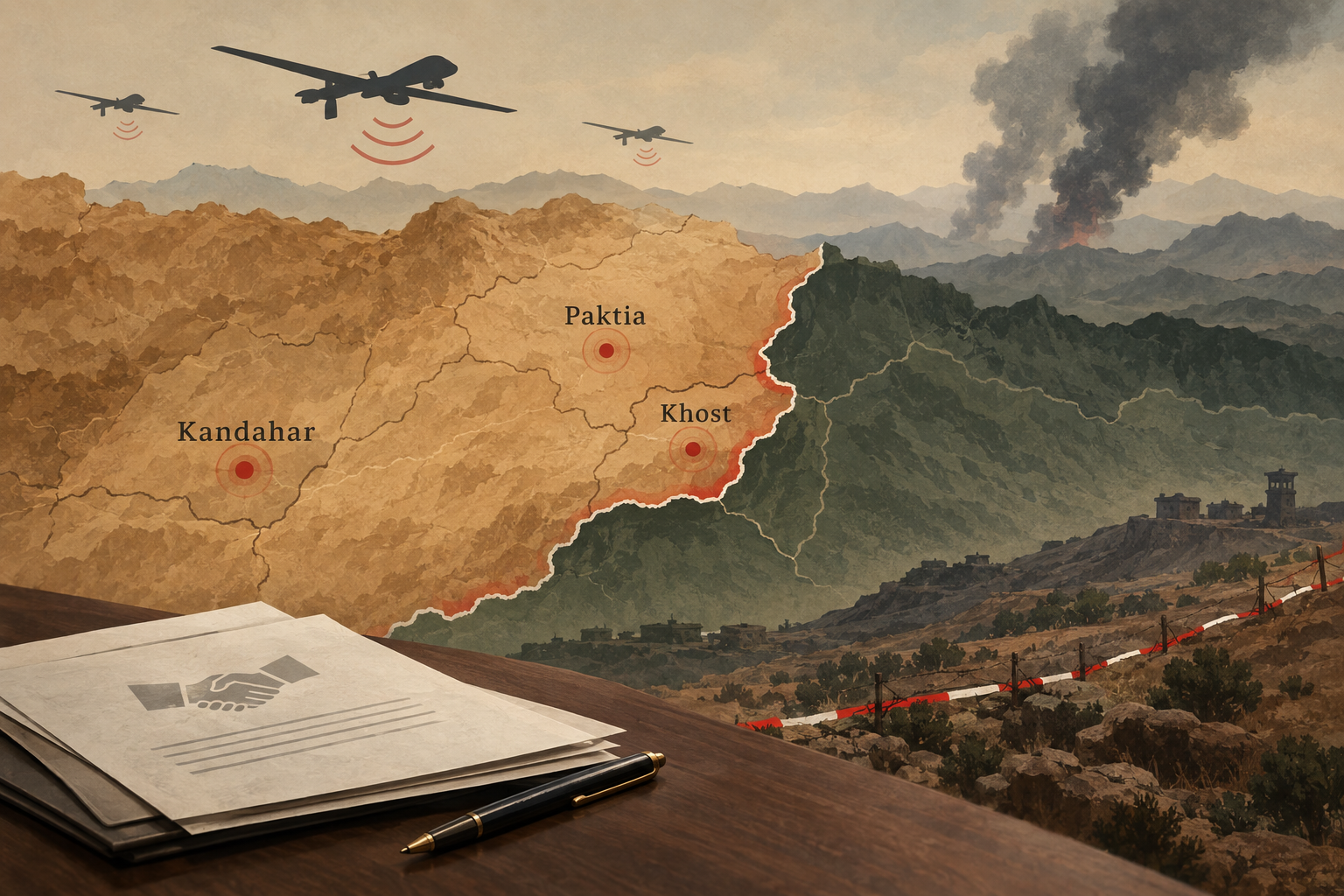
Pakistan said its military carried out air and drone strikes against 10 locations in Afghanistan on Thursday, September 24, sharply escalating a confrontation that Afghan authorities warned would draw an “appropriate response.”

The attacks hit areas in the southern province of Kandahar and the eastern provinces of Paktia and Khost, according to Afghan government spokesperson Zabihullah Mujahid. He said four civilians were killed, condemned the operation as a violation of Afghan sovereignty and accused Pakistan of using unproven claims to justify military action.
Pakistan’s information minister, Attaullah Tarar, said the operation targeted sites used to launch and store drones. He described the strikes as precise and proportionate measures taken in self-defence after what Pakistani officials called a deliberate drone incursion from Afghan territory a day earlier.
According to Pakistani officials, air-defence systems intercepted eight rudimentary drones before they could reach intended targets near Kohat and Torkham. Pakistani security officials also accused Afghan forces of firing mortars and other heavy weapons at border positions after Pakistani troops stopped an attempted militant infiltration.
Afghanistan’s Taliban-led administration denied launching drones into Pakistan. Mujahid said Islamabad’s account was an attempt to shift attention from its domestic security problems and warned that repeated attacks would carry consequences for Pakistani forces.
Kabul lodges formal protest
Afghanistan’s Foreign Ministry summoned Pakistan’s chargé d’affaires in Kabul and delivered a formal protest over the strikes. The ministry called the operation a breach of Afghanistan’s airspace, sovereignty and territorial integrity. It also rejected Pakistan’s allegation that recent attacks inside Pakistan originated from Afghan territory.
Reports from Khost indicated that districts including Gurbuz, Ismail Khel and Mandozai were among the areas struck. Local Afghan officials initially reported no casualties in parts of Khost, while Mujahid’s nationwide figure placed the civilian death toll from the operation at four. Independent confirmation of the targets, damage and total casualties remained limited.
The latest strikes followed several days of violence. On Monday, Pakistan attacked locations in Kunar and Paktika, saying the operation killed 28 militants linked to attacks inside Pakistan. Afghan officials instead said three civilians were killed and four relatives were wounded when a home was hit in Kunar. United Nations personnel in Afghanistan confirmed those civilian casualties and urged compliance with international humanitarian law.
Pakistan has linked its cross-border operations to a surge in militant violence, including deadly attacks on security personnel in Kohat and Hangu. Islamabad repeatedly accuses the Tehrik-e-Taliban Pakistan and allied groups of operating from sanctuaries in Afghanistan with protection or tolerance from the Taliban administration. Kabul denies sheltering anti-Pakistan fighters and maintains that Pakistan’s internal violence should not be blamed on Afghanistan.
Border fighting adds to escalation risk
By Friday, September 25, intermittent firing was reported in the Gulistan border area. Pakistani security sources claimed that several Afghan Taliban fighters had been killed while attempting an attack, but neither government had issued a detailed official account confirming casualties from that exchange.
The combination of air raids, drone allegations, artillery fire and threatened retaliation creates several potential paths to a wider conflict. A local border clash could prompt another round of strikes, while civilian deaths may increase pressure on Kabul to respond visibly. Repeated attacks near populated areas also raise the risk of displacement, disruption to border trade and further civilian harm.
The confrontation is especially dangerous because Pakistan and Afghanistan sharply disagree over the central issue driving the crisis: whether militant networks are planning and directing attacks from Afghan soil. Without a mechanism accepted by both sides to investigate incidents, verify militant movements and examine drone or artillery claims, each new attack can be used to justify the next military response.
Mediation under pressure
China, Türkiye, Qatar and Saudi Arabia have previously supported efforts to reduce tensions and establish a durable ceasefire. No new mediation agreement had been publicly announced by Friday in response to the strikes on Kandahar, Paktia and Khost.
Kabul’s formal protest and promise of retaliation suggest that diplomatic channels remain active but increasingly fragile. Pakistan says it does not seek escalation and remains open to dialogue, while also warning that further attacks will receive a firm response. Whether regional mediators can prevent another cycle of cross-border action will depend on securing restraint from both governments and creating credible arrangements to address Pakistan’s militant-related concerns without further violations of Afghan territory.