
Fresh Rimbi Landslide Damages Homes, Disrupts Connectivity in West Sikkim
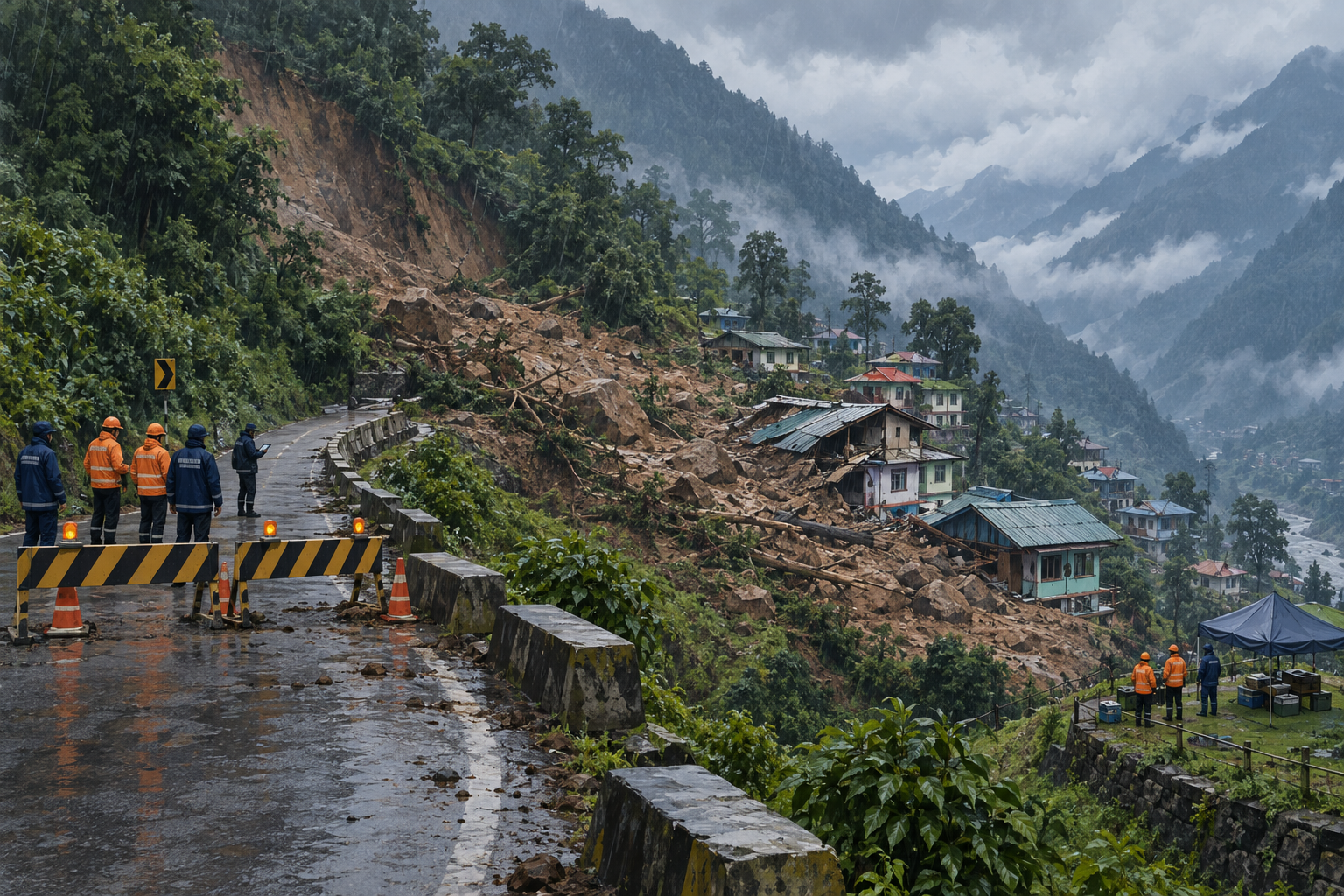
A major landslide struck Rimbi village in Sikkim’s Gyalshing district late on Thursday, September 24, sending mud, rocks and other debris from the upper slopes towards inhabited areas after sustained rainfall.

Several houses were reported damaged or destroyed, while government quarters belonging to the Power Department were also affected. More than 30 houses were described in initial accounts as affected, although authorities had yet to publish a final structure-by-structure damage assessment.
Initial reports available as of Friday afternoon said no casualties had been reported. That remained a preliminary assessment and could be revised as officials inspect damaged buildings and reach vulnerable sections of the village.
Authorities placed on high alert
Sikkim Chief Minister Prem Singh Tamang described the situation as serious and directed the administration to remain on high alert, monitor the affected slopes and take all possible measures to protect residents. He also urged people to remain vigilant and follow official instructions.
The district administration and disaster-management personnel were assessing the damage and watching for further ground movement. Departments responsible for roads, power, relief and local administration have already been involved in the response to repeated landslides around Rimbi and neighbouring Singlitam since August.
Existing preparedness in the area includes temporary relief accommodation, evacuation arrangements and coordination with local panchayat representatives. Rescue personnel from the 72nd Battalion Sashastra Seema Bal have also participated in earlier restoration and emergency work around Rimbi, alongside the District Disaster Management Authority, government departments and local volunteers.
Road access remains a major concern
The latest debris movement has again affected local connectivity and made travel through mud-covered sections hazardous. Rimbi lies along routes serving Khecheopalri and Yuksom, and repeated slope failures have damaged important road links used by residents, government teams and visitors travelling through western Sikkim.
The area was already facing serious access problems before Thursday night’s slide. Earlier landslides damaged the Geyzing–Pelling–Yuksom route, while another stretch connecting the wider Melli–Khecheopalri–Yuksom area suffered a major collapse. The administration had been working on temporary access, with completion dependent on ground and weather conditions.
Debris accumulation has also affected streams near the village. The Sikkim State Disaster Management Authority previously warned that material deposited along the NiK Kholsa could be carried downstream during rain, threatening houses close to the channel. An RCC bridge at Rimbi had already been washed away, and changes in the course of the Rimbi River have placed additional pressure on the roadside flank. A higher-level Bailey bridge has been under consideration to improve connectivity.
Heavy-rain warning adds to slope risk
The India Meteorological Department had placed Gyalshing under an orange warning for heavy to very heavy rain on September 24. A yellow warning for heavy rain remained in effect across Sikkim’s districts on September 25.
The weather agency warned of possible landslides, mudslides, road blockages, local flooding, reduced visibility and damage to vulnerable structures. Continued rainfall is particularly dangerous where slopes have already moved, because water can saturate loosened soil and send accumulated debris downhill.
Previous rainfall and flooding prompted the precautionary evacuation of 128 people from 28 houses in vulnerable parts of Rimbi on September 14. Residents were moved to the Rimbi Gram Panchayat Kendra, where relief arrangements were established. Monitoring lights were also installed near the affected site to help teams observe slope activity during rain and at night.
Safety advisory for residents and travellers
The latest available public-safety guidance advises residents to leave vulnerable homes whenever directed, avoid active slide zones and stay away from debris-filled streams, rivers and drainage channels during rainfall. People should immediately report fresh cracks, unusual ground movement, sudden changes in water flow or sounds that may indicate another slope failure.
Travellers heading towards Rimbi, Khecheopalri or Yuksom should confirm road conditions with local authorities before departure and avoid unnecessary movement during intense rain. Conditions can change rapidly, and a route described as passable may become unsafe after fresh debris movement.
Authorities are expected to issue further information after completing their assessment of the latest damage, road access and the safety of households remaining near the unstable slope.